

B2B Marketing Analytics: Complete Guide to Data-Driven Growth

B2B marketing analytics is the systematic process of collecting, measuring, and analyzing marketing data to understand how your activities influence pipeline and revenue. Unlike B2C analytics focused on individual transactions, B2B analytics must track longer sales cycles (often 6-18 months), multiple decision-makers within accounts, and complex buying journeys across numerous touchpoints.
What is B2B Marketing Analytics?
B2B marketing analytics involves tracking every digital interaction prospects have with your brand—from first website visit to closed deal—and connecting those touchpoints to business outcomes. The goal is to understand which marketing activities generate pipeline, accelerate deals, and contribute to revenue.
Core components of B2B marketing analytics:
- Data collection across website, email, social, ads, and CRM systems
- Attribution modeling to credit touchpoints in the buyer journey
- Pipeline analysis connecting marketing to sales outcomes
- Predictive modeling to forecast results and optimize spend
- Reporting that communicates marketing impact to stakeholders
Modern B2B buyers complete a significant portion of their research before engaging sales teams. This makes tracking digital behavior and understanding the self-service buying journey essential for marketing effectiveness.
Key B2B Marketing Metrics to Track
Lead Generation Metrics
Marketing Qualified Leads (MQLs) Track leads that match your ideal customer profile and show buying intent through specific actions like downloading whitepapers or attending webinars.
Create content, post everywhere
Create captions, images, and videos with AI. Schedule to 9 platforms in seconds.
Start your free trial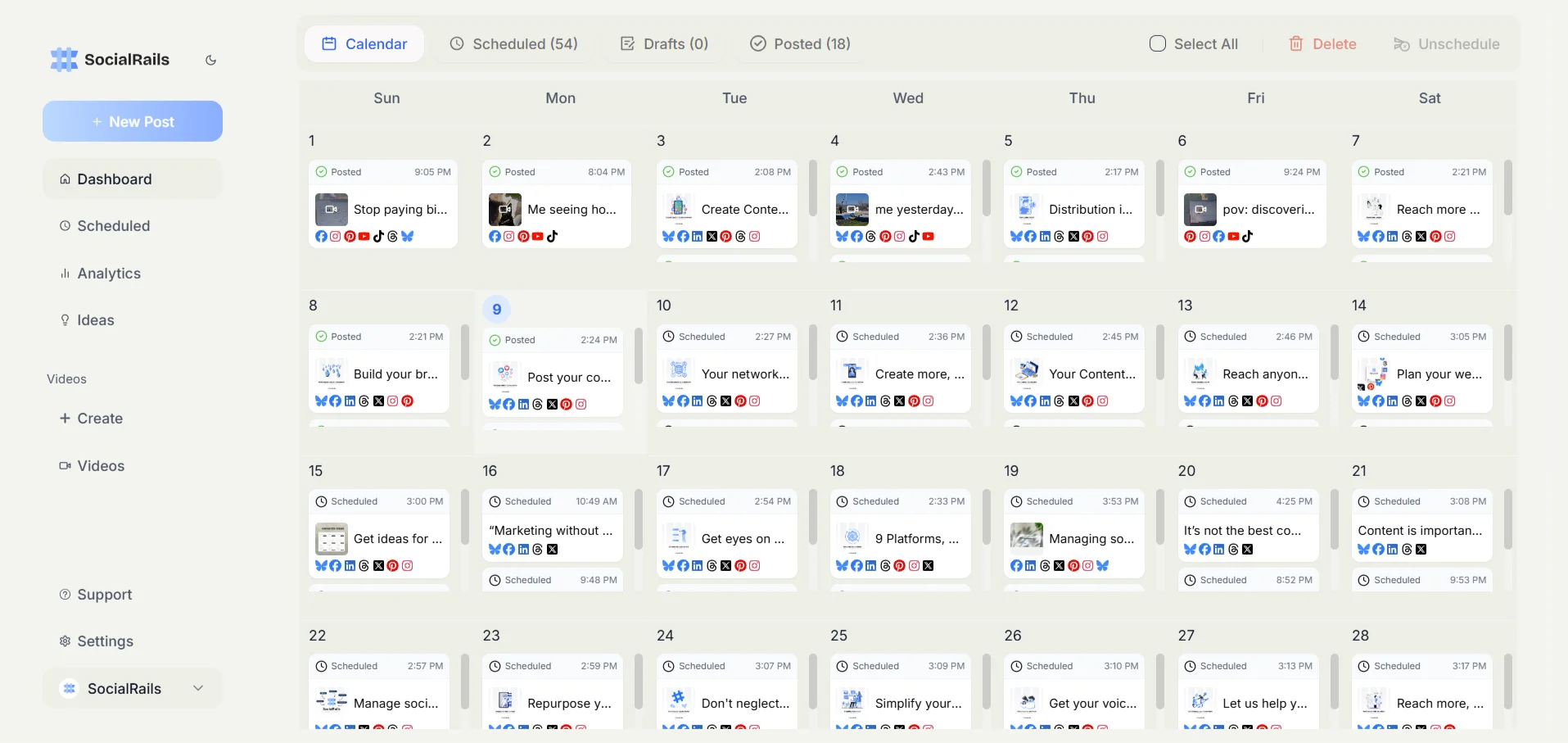
Sales Qualified Leads (SQLs) Monitor leads that sales teams have vetted and deemed ready for direct outreach. The MQL to SQL conversion rate reveals your lead quality.
Cost Per Lead (CPL) Calculate your total marketing spend divided by number of leads generated. Compare CPL across channels to optimize budget allocation.
Engagement Metrics
Account Engagement Score Track how multiple stakeholders from target accounts interact with your content. High engagement from multiple contacts indicates buying readiness.
Content Performance Measure which content pieces drive the most engagement, leads, and pipeline. Focus on:
- Download rates for gated content
- Time spent on key pages
- Return visitor rates
- Share and forward rates
Revenue Metrics
Customer Acquisition Cost (CAC) Include all marketing and sales costs divided by new customers acquired. B2B CAC is typically higher but should be balanced against customer lifetime value.
Marketing Influenced Revenue Track revenue from deals where marketing touched the prospect at any point. This broader metric captures marketing's full impact.
Pipeline Velocity Measure how quickly leads move through your funnel. Faster velocity means more efficient marketing and sales alignment.
Setting Up Your B2B Analytics Framework
1. Define Clear Goals
Start with business objectives, then work backward to marketing metrics:
- Revenue targets → Pipeline needed → Leads required → Traffic goals
- Each level needs specific, measurable targets
2. Map Your Customer Journey
B2B journeys involve multiple touchpoints:
- Awareness: First website visit, content downloads
- Consideration: Demo requests, pricing page views
- Decision: Proposal views, stakeholder engagement
- Retention: Product usage, support interactions
3. Implement Proper Tracking
Website Analytics
- Use Google Analytics 4 for behavior tracking
- Set up conversion goals for key actions
- Track account-level activity, not just individuals
CRM Integration
- Connect marketing automation with your CRM
- Track lead source and campaign attribution
- Monitor deal progression and win rates
Multi-Touch Attribution
- First-touch: Credit to initial interaction
- Last-touch: Credit to final interaction
- Linear: Equal credit across touchpoints
- Time-decay: More credit to recent interactions
Predictive Analytics in B2B Marketing
Predictive analytics uses historical data and machine learning to forecast future outcomes. For B2B marketers, this means anticipating which leads will convert, which accounts might churn, and where to allocate budget for maximum impact.
Lead Scoring Models
Build models that predict lead quality based on:
- Firmographic data: Company size, industry, revenue, employee count, technology stack
- Behavioral signals: Content engagement, email opens, website visits, time on site
- Intent data: Search behavior, competitor research, review site activity
- Engagement recency: Recent activity weighted more heavily than historical
Practical implementation:
- Start with a simple point-based scoring model
- Assign values to key actions (demo request = 50 points, whitepaper download = 10 points)
- Include negative scoring (unsubscribes, bounces)
- Review and adjust scores quarterly based on actual conversion data
Churn Prediction
Identify at-risk accounts before they leave:
- Monitor product usage patterns and login frequency
- Track support ticket trends and sentiment
- Analyze engagement drops in email and platform usage
- Watch for signals like decreased feature adoption or stakeholder turnover
Revenue Forecasting
Use historical data to predict:
- Seasonal patterns in your sales cycle
- Campaign performance trends by channel and content type
- Market condition impacts on deal velocity
- Budget pacing and spend optimization
AI-Powered Analytics for B2B
AI is transforming B2B marketing analytics from descriptive (what happened) to prescriptive (what to do next).
AI Applications in B2B Analytics
Automated Insights AI tools can scan your data and surface anomalies, trends, and opportunities without manual analysis. This includes identifying sudden traffic spikes, engagement pattern changes, and conversion rate fluctuations.
Natural Language Querying Modern BI tools allow marketers to ask questions in plain language ("Which campaigns drove the most pipeline last quarter?") and receive instant visualizations and answers.
Predictive Lead Scoring Machine learning models analyze thousands of data points to score leads more accurately than rule-based systems. These models improve over time as they learn from actual conversion outcomes.
Content Performance Optimization AI analyzes which content topics, formats, and distribution channels perform best for different audience segments, helping prioritize content investments.
Privacy-First Analytics
With increased data privacy regulations (GDPR, CCPA) and the deprecation of third-party cookies, B2B marketers must adopt privacy-first analytics approaches:
First-Party Data Strategy
- Build owned databases through gated content, events, and email signups
- Use server-side tracking to maintain measurement while respecting privacy
- Implement consent management platforms for compliance
Contextual Targeting
- Focus on intent signals from first-party sources
- Use account-based approaches that don't rely on individual tracking
- Leverage publisher relationships for contextual advertising
Data Clean Rooms For enterprise B2B, data clean rooms allow secure data matching between parties without exposing raw data. This enables measurement and targeting while maintaining privacy compliance.
Tools for B2B Marketing Analytics
Selecting the right analytics stack depends on your company size, budget, and technical resources. Here's how the major tools compare:
Web Analytics Platforms
Google Analytics 4
- Best for: Companies of all sizes needing website behavior tracking
- Key features: Event-based tracking, BigQuery export, machine learning insights, cross-device tracking
- B2B advantages: Conversion modeling, engagement metrics, custom dimensions for account tracking
- Cost: Free (GA4 360 for enterprise starts around $50K/year)
Adobe Analytics
- Best for: Enterprise companies with complex tracking needs
- Key features: Real-time segmentation, predictive analytics, cross-channel attribution
- B2B advantages: Advanced segmentation, custom variables, integration with Adobe Experience Cloud
- Cost: Enterprise pricing (typically $100K+/year)
Marketing Automation with Analytics
HubSpot
- Best for: Small to mid-market B2B companies
- Key features: Built-in attribution reporting, revenue analytics, contact scoring
- B2B advantages: Full-funnel visibility from first touch to closed deal, native CRM integration
- Cost: Marketing Hub starts at $800/month (Professional tier)
Marketo (Adobe)
- Best for: Enterprise B2B with complex lead scoring needs
- Key features: Multi-touch attribution, revenue cycle analytics, account-based marketing
- B2B advantages: Sophisticated lead scoring, integration with Salesforce
- Cost: Enterprise pricing (typically $36K+/year)
Pardot (Salesforce Marketing Cloud Account Engagement)
- Best for: Salesforce-centric B2B organizations
- Key features: B2B Marketing Analytics dashboards, engagement scoring, campaign influence
- B2B advantages: Native Salesforce integration, account-based analytics
- Cost: Starts at $1,250/month
Attribution Tools
Bizible (Adobe)
- Full-funnel attribution across all touchpoints
- Connects marketing activities to revenue in Salesforce
- Best for enterprise Salesforce users
HubSpot Attribution
- Multi-touch attribution included in Marketing Hub
- Connects website, email, ads, and sales data
- Best for HubSpot customers
Dreamdata
- B2B-specific revenue attribution
- Account-based journey mapping
- Best for mid-market B2B SaaS
Business Intelligence
Tableau Create custom dashboards combining data from multiple sources. Excellent for teams with data analysts who need flexibility. Learn how to set up effective marketing dashboards with templates.
Looker (Google) Cloud-based BI with strong data modeling capabilities. Integrates well with Google Cloud and BigQuery.
Power BI (Microsoft) Cost-effective option for organizations in the Microsoft ecosystem. Strong integration with Dynamics and Excel.
Account-Based Marketing Analytics
Account-based marketing (ABM) requires a different analytics approach focused on accounts rather than individual leads.
ABM-Specific Metrics
Account Engagement Score Aggregate engagement across all contacts at a target account. Track:
- Total website visits from account IP range or identified contacts
- Content downloads by account members
- Email engagement rates across the account
- Event attendance from the account
Account Penetration Measure how deeply you've engaged within target accounts:
- Number of contacts engaged vs. buying committee size
- Departments represented in your database
- Seniority levels of engaged contacts
Account Progression Track how accounts move through your funnel:
- Time in each stage
- Engagement velocity
- Activities that accelerate progression
ABM Platform Analytics
Tools like Demandbase, 6sense, and Terminus provide account-level analytics including:
- Intent data showing which accounts are researching your solution category
- Account identification revealing anonymous website visitors
- Engagement analytics aggregated at the account level
- Advertising performance by target account
Common B2B Analytics Challenges
Long Sales Cycles
B2B deals can take months or years. Solutions:
- Track leading indicators like engagement
- Use cohort analysis to compare periods
- Monitor pipeline stages, not just closed deals
Multiple Stakeholders
B2B purchases involve 6-10 decision makers. Address this by:
- Tracking account-level engagement
- Identifying champion behavior patterns
- Measuring stakeholder alignment
Attribution Complexity
B2B buyers interact across many channels. Improve attribution through:
- Implementing proper UTM tagging
- Using marketing automation tracking
- Combining online and offline touchpoints
Creating Actionable Reports
Executive Dashboards
Focus on business impact:
- Revenue influenced by marketing
- Pipeline generation and velocity
- CAC and payback period
- Market share and competitive position
- Brand equity and value assessment. For comprehensive frameworks on measuring and quantifying brand worth, explore our Brand Value Measurement Guide with financial valuation methodologies
Team Performance Reports
Track operational metrics:
- Campaign performance by channel
- Content engagement rates
- Lead quality by source
- Conversion rates by stage
Weekly Reviews
Monitor leading indicators:
- Website traffic trends
- Lead flow by source
- Campaign pacing
- Engagement spikes or drops
Best Practices for B2B Analytics Success
- Start Simple: Begin with core metrics before adding complexity
- Maintain Data Quality: Clean data is more valuable than more data
- Align with Sales: Share definitions and goals across teams
- Test Continuously: Run A/B tests on campaigns, landing pages, and messaging
- Document Everything: Create a data dictionary for consistent measurement
- Review Regularly: Schedule weekly and monthly review sessions
- Act on Insights: Data without action is just numbers
Integrating Analytics with Social Media
For B2B companies using social media, integrate social analytics:
- Track LinkedIn engagement by account
- Monitor Twitter conversations about your brand
- Measure social selling impact on pipeline
Learn more about Social Media Analytics Tools to complement your B2B analytics stack.
Moving Forward with B2B Analytics
Successful B2B marketing analytics requires commitment to continuous improvement. Start with fundamental metrics, gradually add sophistication, and always tie measurements back to business outcomes.
Focus on insights that drive action. The goal isn't perfect data but better decisions that accelerate growth.
Frequently Asked Questions
What are the most important B2B marketing analytics metrics to track?
Key B2B marketing metrics include Marketing Qualified Leads (MQLs), Sales Qualified Leads (SQLs), Cost Per Lead (CPL), Customer Acquisition Cost (CAC), marketing influenced revenue, pipeline velocity, and account engagement scores. Focus on metrics that directly tie to revenue and business growth.
How is B2B marketing analytics different from B2C analytics?
B2B marketing analytics requires tracking longer sales cycles, multiple decision-makers in each account, complex customer journeys, and account-based engagement rather than individual behavior. B2B also focuses more on lead quality over quantity and pipeline influence over direct conversions.
What tools are essential for B2B marketing analytics?
Essential B2B marketing analytics tools include Google Analytics 4 for website tracking, CRM systems like HubSpot or Salesforce for lead management, marketing automation platforms, attribution tools like Bizible or Attribution, and account intelligence tools for ABM tracking.
How do you measure marketing ROI in B2B?
Measure B2B marketing ROI by calculating marketing influenced revenue divided by marketing costs, tracking customer acquisition cost against customer lifetime value, measuring pipeline contribution by channel, and using attribution models to understand multi-touch customer journeys.
What is marketing attribution and why is it important for B2B?
Marketing attribution tracks and credits touchpoints in the customer journey that lead to conversions. For B2B, attribution is crucial because sales cycles are long with multiple touchpoints. It helps understand which marketing activities truly drive pipeline and revenue.
How often should B2B marketers review their analytics?
Review B2B marketing analytics weekly for operational metrics like lead flow and monthly for strategic metrics like pipeline influence. Quarterly reviews should focus on attribution analysis and annual reviews on customer lifetime value and acquisition cost trends.
What are common B2B marketing analytics mistakes to avoid?
Common mistakes include focusing only on vanity metrics like website traffic, not tracking the full customer journey, poor lead scoring implementation, ignoring multi-touch attribution, failing to align marketing and sales metrics, and not connecting marketing activities to revenue outcomes.
How do you set up proper B2B marketing analytics tracking?
Set up B2B analytics by implementing comprehensive tracking in your CRM, integrating marketing automation with sales systems, using UTM parameters consistently, setting up conversion tracking for key actions, implementing lead scoring, and creating regular reporting dashboards for stakeholders.
Related Resources
B2B marketing analytics provides the foundation for sustainable growth. By measuring what matters and acting on insights, you transform marketing from a cost center into a revenue driver.
Was this article helpful?
Let us know what you think!