

15 Content Marketing Goals That Actually Drive Revenue

15 Content Marketing Goals That Actually Drive Revenue
Most content marketing fails because there are no clear goals. Teams publish content, hope for the best, and wonder why nothing happens.
Fix that by setting specific goals tied to business outcomes.
The 5 Goal Categories
Every content marketing goal falls into one of five categories: Awareness (get found), Engagement (build audience), Lead Generation (capture interest), Revenue (make money), or Authority (become the expert). Pick 2-3 goals max per quarter.
Create content, post everywhere
Create captions, images, and videos with AI. Schedule to 9 platforms in seconds.
Start your free trial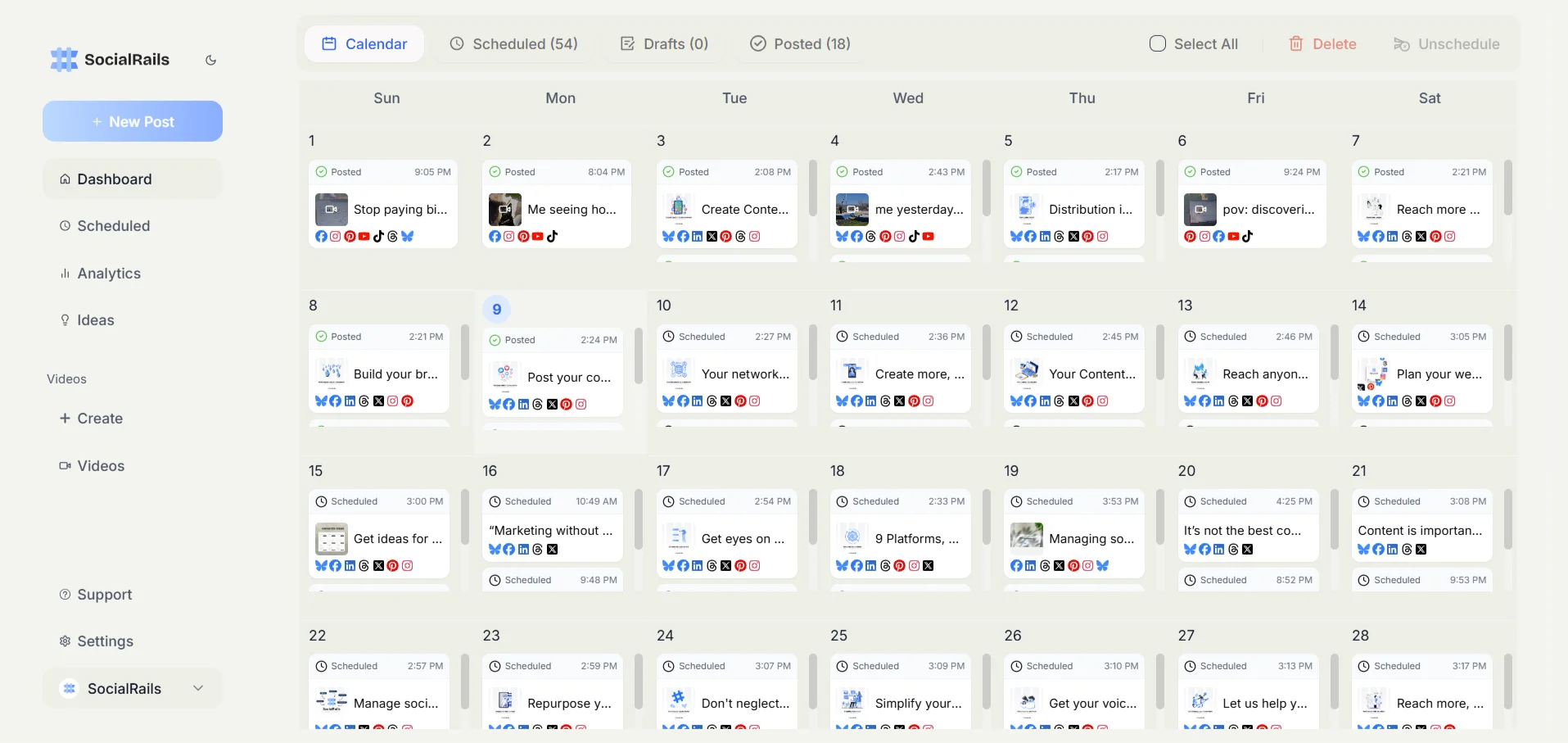
Awareness Goals
1. Increase Organic Traffic
What to measure: Monthly organic sessions from search engines Good target: 20-50% increase per quarter How content drives it: SEO-optimized blog posts, pillar pages, and long-tail keyword content bring in consistent search traffic.
2. Build Brand Awareness
What to measure: Brand search volume, social mentions, direct traffic Good target: 15-30% increase in brand searches per quarter How content drives it: Expert articles, original research, and shareable content put your brand in front of new people. Make sure your pages have proper OG tags so they look good when shared on social media.
3. Grow Social Media Following
What to measure: Follower count + engagement rate across platforms Good target: 10-25% follower growth with 2%+ engagement rate How content drives it: Social-native content like carousels, short videos, and threads attracts followers. Repurposed blog content extends reach. Track progress with a social media KPI template that ties follower growth to engagement benchmarks.
Use SocialRails to schedule and analyze your social content across all platforms from one dashboard.
Engagement Goals
Which metric best indicates brand awareness growth?
4. Grow Email Subscribers
What to measure: New email signups per month Good target: 500-2,000 new subscribers per month (varies by audience size) How content drives it: Lead magnets, content upgrades, and newsletter opt-ins on blog posts convert readers to subscribers.
5. Increase Content Shares
What to measure: Social shares per post Good target: Average 50+ shares per piece of content How content drives it: Original data, strong opinions, practical tools, and visual content get shared more.
6. Improve Time on Site
What to measure: Average session duration and pages per session Good target: 3+ minutes average session, 2+ pages per visit How content drives it: In-depth guides, internal linking, and engaging formats keep readers on-site longer.
Lead Generation Goals
7. Generate Marketing Qualified Leads (MQLs)
What to measure: MQLs from content channels per month Good target: 100-500 MQLs per month (varies by business) How content drives it: Gated content like ebooks, templates, and webinars, plus bottom-of-funnel comparison posts and case studies, attract qualified prospects.
8. Increase Conversion Rate
What to measure: Visitor-to-lead conversion rate on content pages Good target: 2-5% for blog posts, 10-25% for landing pages How content drives it: Clear CTAs, relevant lead magnets, and content that matches search intent convert readers into leads.
9. Build Email List
What to measure: Total active email subscribers Good target: Double your list annually How content drives it: Every piece of content is a chance to capture an email. Exit-intent popups, inline forms, and content upgrades all contribute.
Revenue Goals
10. Increase Sales From Content
What to measure: Revenue attributed to content-assisted conversions Good target: 20-40% of total revenue should be content-influenced How content drives it: Product-led content, buying guides, comparison posts, and case studies directly influence purchase decisions.
11. Reduce Customer Acquisition Cost (CAC)
What to measure: Cost to acquire one customer through content vs paid channels Good target: Content CAC should be 30-60% lower than paid CAC How content drives it: Organic content compounds over time. A blog post that ranks #1 generates leads for years at zero marginal cost. To quantify these savings, use a marketing ROI measurement framework that compares content CAC against paid channels over time.
12. Improve Customer Retention
What to measure: Churn rate, customer lifetime value Good target: Reduce churn by 5-15% annually How content drives it: Onboarding guides, product tutorials, knowledge bases, and educational newsletters keep customers engaged.
Authority Goals
What's a realistic content marketing customer acquisition cost compared to paid ads?
13. Build Industry Authority
What to measure: Speaking invitations, media mentions, guest post requests Good target: 5+ industry mentions per quarter How content drives it: Original research, data-driven insights, and expert commentary position you as the go-to source in your space.
14. Earn Backlinks
What to measure: Number of referring domains to your content Good target: 10-50 new referring domains per month How content drives it: Original research, in-depth guides, free tools, and infographics naturally attract backlinks from other sites.
15. Rank for Target Keywords
What to measure: Number of keywords in top 10 positions Good target: 20-50% increase in top-10 keywords per quarter How content drives it: Consistent publishing of well-optimized content builds topical authority and steadily captures more keyword positions.
How to Set SMART Content Marketing Goals
Every goal should be Specific, Measurable, Achievable, Relevant, and Time-bound.
Bad goal: "Create more content" SMART goal: "Publish 12 SEO-optimized blog posts per month targeting bottom-of-funnel keywords, generating 150 MQLs per month by June 30"
Once your goals are defined, build a marketing implementation plan to assign owners, set timelines, and turn each goal into actionable tasks.
How many content marketing goals should you set per quarter?
How to Measure Each Goal
Content Marketing Goals Template
Use this framework for each goal:
FAQ
How many content marketing goals should I have? 2–3 goals per quarter maximum. More than that splits focus and dilutes results.
What's the most important content marketing goal? Depends on your business stage. Startups should focus on awareness and authority. Established businesses should focus on lead generation and revenue.
How long before content marketing goals show results? Awareness goals like traffic and rankings typically take 3-6 months. Revenue goals take 6-12 months to fully materialize.
Should content marketing goals align with sales goals? Yes. The best content marketing goals are derived from business revenue targets, then broken down into the content activities needed to hit them.
What if we're not hitting our content marketing goals? Review weekly. If a goal is off-track for 3+ consecutive weeks, adjust tactics, not the goal. Common fixes: increase publishing frequency, improve content quality, push harder on promotion, or refine keyword targeting.
How do I prove ROI on content marketing? Track content-assisted conversions in your CRM. Show the pipeline value of leads that engaged with content before converting. Compare content CAC to paid channel CAC.
Related Resources
Was this article helpful?
Let us know what you think!