

How to Create a Social Media App: Complete Guide for 2026

How to Create a Social Media App: Complete Guide for 2026
Building a social media app is brutal. Crowded market. Sky-high expectations. Network effects make growth hard.
Most apps fail within year one. Not bad ideas—bad planning, underestimated complexity, or burned cash before product-market fit.
This guide covers validation, MVP features, tech stacks, costs, and launch strategy.
Create content, post everywhere
Create captions, images, and videos with AI. Schedule to 9 platforms in seconds.
Start your free trial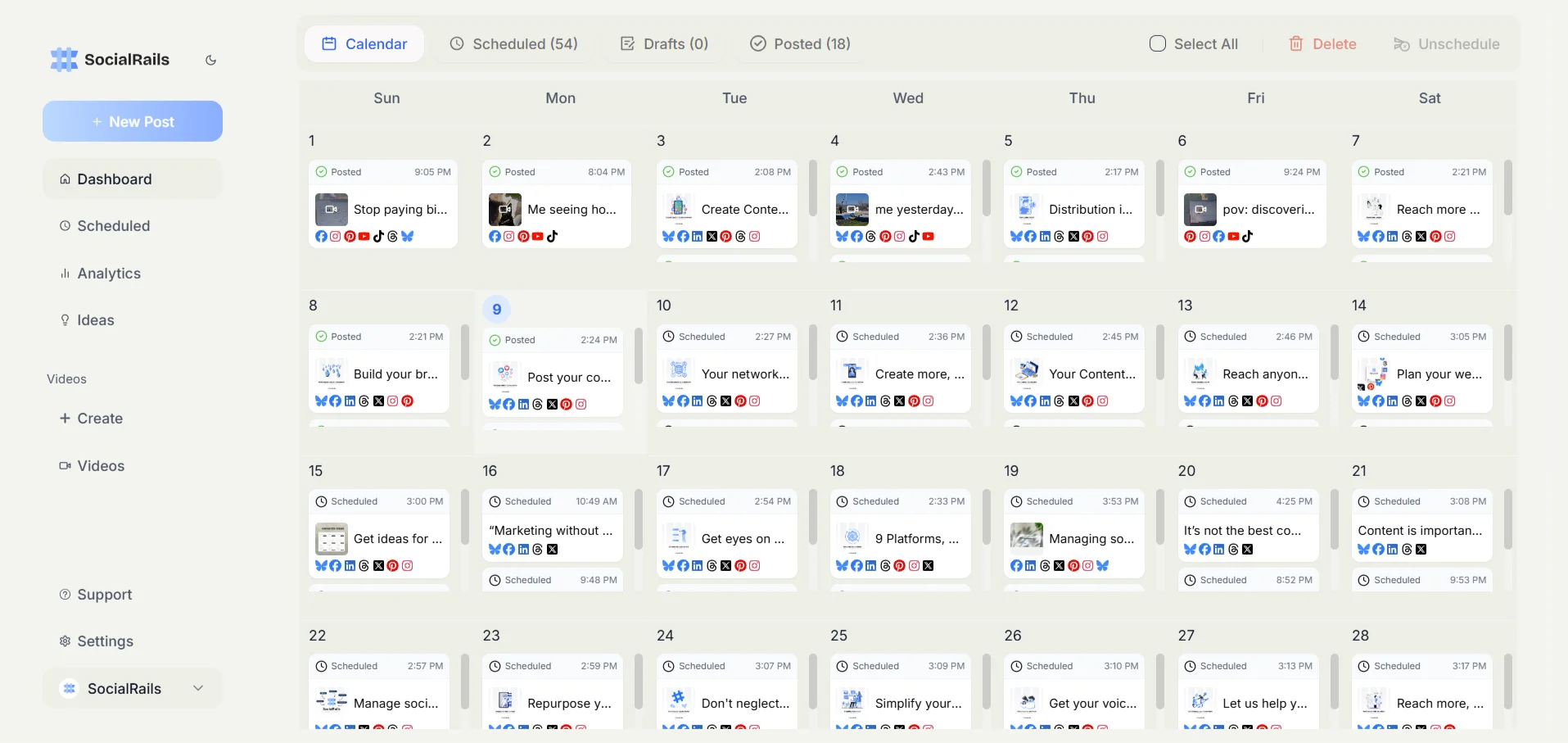
Before You Start: Is Your Idea Worth Building?
Questions to answer first
1. What's your unique angle?
Instagram owns photos. TikTok owns short video. Twitter owns real-time conversation. BeReal owns authenticity.
Your app needs a clear answer to: "Why would someone use this instead of what already exists?"
Viable angles:
- Underserved niche (professional fishermen, knitters, rare book collectors)
- New format (audio-only, AR-based, ephemeral)
- Different values (privacy-first, no algorithms, local-only)
- Specific use case (planning group trips, coordinating teams, sharing recipes)
2. Who exactly is this for?
"Everyone" is not a target market. The more specific, the better.
Bad: "People who want to connect" Good: "Remote workers who want serendipitous connections like they had in offices"
3. Why will they switch?
Switching costs for social apps are high. Users have existing networks, content history, and habits.
Your app needs to be 10x better for a specific use case, not 10% better at everything.
Validation before building
Talk to 20+ potential users:
- Would they use this?
- What would make them switch?
- What's missing from current solutions?
Test with landing page:
- Create a simple page explaining your concept
- Collect email signups
- Measure interest before writing code
Competition research:
- What exists already?
- Why did similar attempts fail?
- What's the gap in the market?
You want to build a social app for dog owners. What's the strongest market validation?
Core Features Every Social App Needs
Must-have features (MVP)
1. User profiles
- Registration/authentication
- Profile creation (name, bio, photo)
- Settings and preferences
- Account management
2. Content creation
- Post/upload functionality
- Text, image, or video support (pick one to start)
- Editing capabilities
- Publishing flow
3. Content discovery
- Feed of content
- Search functionality
- Basic algorithm or chronological display
- Explore/discover section
4. Social interactions
- Follow/friend system
- Like/react to content
- Comments or replies
- Share functionality
5. Notifications
- Push notifications
- In-app notifications
- Email notifications
- Notification preferences
6. Messaging (optional for MVP)
- Direct messages
- Group chats
- Media sharing in messages
Nice-to-have features (post-launch)
- Stories/ephemeral content
- Live streaming
- Audio rooms
- Monetization tools
- Analytics dashboard
- Verified accounts
- Content moderation tools
- Advertising system
- API for developers
Technical Architecture
Tech stack options
Mobile development:
Backend:
Media storage:
- AWS S3 or Cloudflare R2 for images/videos
- CDN (Cloudflare, CloudFront) for delivery
- Image processing service (Imgix, Cloudinary)
Real-time features:
- Socket.io for Node.js
- Firebase Realtime Database
- Pusher for managed solution
- WebSockets for custom implementation
Architecture considerations
1. Start simple, scale later
Don't over-engineer. A monolithic architecture is fine until you have millions of users. Premature optimization kills startups.
2. Plan for content moderation
You WILL have spam, abuse, and illegal content. Build moderation tools from day one:
- Reporting system
- Content review queue
- Automated spam detection
- Block/mute functionality
3. Design for offline
Social apps need to work with spotty connections. Implement offline caching and graceful degradation.
4. Optimize for feeds
Feed generation is the hardest technical challenge. Options:
- Pull-based: Calculate feed on request (simple but slow)
- Push-based: Pre-compute feeds (fast but complex)
- Hybrid: Combine based on user activity
Development Process
Phase 1: Planning (2-4 weeks)
Deliverables:
- Product requirements document
- User personas
- User flow diagrams
- Wireframes
- Technical architecture document
- Project timeline
- Budget breakdown
Phase 2: Design (3-6 weeks)
Deliverables:
- Brand identity
- UI design system
- High-fidelity mockups
- Interactive prototype
- Design specifications
Phase 3: Development (3-6 months for MVP)
Backend development:
- Database design
- API development
- Authentication system
- File storage setup
- Third-party integrations
Frontend development:
- User interface implementation
- API integration
- Local storage/caching
- Push notifications
- Testing
Infrastructure:
- Cloud hosting setup
- CI/CD pipeline
- Monitoring and logging
- Security implementation
Phase 4: Testing (2-4 weeks)
- Functional testing
- Performance testing
- Security testing
- User acceptance testing
- Beta testing with real users
Phase 5: Launch
- App store submissions
- Marketing launch
- User support setup
- Monitoring dashboards
- Bug fix process
Development Cost Estimates
In-house team
Minimum viable team:
- 1 Product manager
- 1 Designer
- 2 Mobile developers
- 1 Backend developer
- 1 QA engineer
Annual cost: $500K-800K (US salaries) Time to MVP: 4-6 months
Outsourced development
Agency development:
- US/Western Europe: $150K-300K for MVP
- Eastern Europe: $80K-150K for MVP
- Asia (India, Philippines): $40K-80K for MVP
Freelancers:
- Even cheaper but harder to manage
- Quality varies significantly
No-code/low-code
Platforms: Adalo, Bubble, FlutterFlow
Cost: $5K-20K for MVP Time: 1-3 months
Limitations:
- Performance constraints
- Limited customization
- Scaling challenges
- Potential platform lock-in
Realistic budget for success
Minimum to launch and iterate:
- MVP development: $100K-200K
- 12 months runway for team: $300K-500K
- Marketing budget: $50K-100K
- Total: $450K-800K
Most successful social apps raised $1M+ before achieving product-market fit.
Monetization Strategies
Advertising (most common)
How it works: Display ads in feed, stories, or between content
Pros: Free for users, scales with growth Cons: Need massive scale, degrades UX
When to implement: After 100K+ daily active users
Subscription/Premium
How it works: Free tier + paid features
Premium features:
- Ad-free experience
- Advanced analytics
- Exclusive content access
- Additional storage
- Special badges/status
Pros: Sustainable revenue, better UX Cons: Low conversion rates (typically 1-5%)
Creator monetization
How it works: Take cut of creator earnings
Options:
- Tipping/donations
- Paid subscriptions to creators
- Exclusive content purchases
- Virtual gifts
Pros: Aligns incentives with creators Cons: Need established creator base first
In-app purchases
How it works: Sell virtual items or features
Options:
- Filters and effects
- Virtual currency
- Profile customizations
- Boosts/promotion
Pros: High margins, gamification potential Cons: Can feel exploitative if not done well
Legal Requirements
Privacy compliance
GDPR (Europe):
- Clear privacy policy
- Consent management
- Data deletion requests
- Data portability
CCPA (California):
- Right to know what data is collected
- Right to delete personal information
- Right to opt-out of data sales
COPPA (children under 13):
- Parental consent requirements
- Limited data collection
- Age verification
Terms of service
Must include:
- User conduct rules
- Content ownership
- Account termination rights
- Liability limitations
- Dispute resolution
Content moderation
Legal obligations:
- Remove illegal content promptly
- Report child exploitation (mandatory)
- Respond to DMCA takedown requests
- Handle law enforcement requests
Practical requirements:
- Community guidelines
- Reporting system
- Review process
- Appeal mechanism
Growth Strategies
Pre-launch
Build waitlist:
- Landing page with clear value proposition
- Email capture with incentive
- Referral program for early access
Influencer seeding:
- Identify micro-influencers in your niche
- Give exclusive early access
- Make them feel like owners
Launch
Platform-specific strategies:
App Store optimization:
- Keyword research for title/description
- Compelling screenshots
- Video preview
- Ratings solicitation
PR and media:
- Press release
- Tech media outreach
- Founder story angles
- Product Hunt launch
Post-launch growth
Viral mechanics:
- Make sharing feel natural
- Reward inviting friends
- Create shareable content formats
- Cross-platform sharing
Community building:
- Early user feedback loops
- User-generated content promotion
- Community events
- Ambassador programs
Retention focus:
- Onboarding optimization
- Notification strategy
- Re-engagement campaigns
- Feature development based on usage
Common Failure Points
1. Building before validating
Don't spend $200K building something nobody wants. Validate with landing pages, prototypes, and user interviews first.
2. Feature creep
Start with one core use case. Do it exceptionally well. Add features only when users demand them.
3. Ignoring retention
Acquiring users is expensive. If they don't stick around, you'll burn through money fast. Focus on retention before growth.
4. Underestimating moderation
Content moderation is expensive, stressful, and legally risky. Budget for it from the start.
5. Running out of runway
Social apps typically need 2-3 years to find product-market fit. Raise enough capital or have enough savings to survive that long.
You're 6 months into building your social app. You have 500 users but retention is low. What's priority #1?
Tools for Building Social Apps
No-code/Low-code
- Bubble: Most flexible no-code platform
- Adalo: Best for mobile apps
- FlutterFlow: Visual Flutter builder
Development
- Firebase: Backend, auth, real-time database
- Supabase: Open-source Firebase alternative
- Stream: Pre-built chat and feed SDKs
- Sendbird: Chat infrastructure
Design
- Figma: UI/UX design
- Mobbin: App design inspiration
- Coolors: Color palette generation
Analytics
- Mixpanel: Product analytics
- Amplitude: User behavior tracking
- Firebase Analytics: Free basic analytics
Moderation
- Perspective API: Toxicity detection
- AWS Rekognition: Image moderation
- Hive Moderation: Content review
Timeline Summary
Total time to MVP: 6-10 months (realistic)
Frequently Asked Questions
How much does it cost to build an app like Instagram?
Instagram's current feature set would cost $5-10M+ to replicate. But Instagram started as a simple photo-sharing app. An MVP with core features costs $100K-300K.
Can I build a social app without coding?
Yes, with no-code tools like Bubble or Adalo. Good for validating concepts, but you'll likely need to rebuild with code to scale.
How do social apps make money with free users?
Advertising (most common), premium subscriptions, creator monetization cuts, and in-app purchases. Most apps don't monetize until they have significant scale.
What's the biggest challenge in building a social app?
Achieving network effects. A social app is only valuable if other people use it. Getting the first 1,000 engaged users is the hardest part.
Should I build for iOS, Android, or both?
Start with one platform (usually iOS for US market, Android for international). Expand after validating product-market fit.
Conclusion
Building a social media app is one of the hardest startup challenges. The technical complexity is significant, but the real challenge is product-market fit and user acquisition.
Keys to success:
- Validate before building
- Start with one exceptional feature, not many mediocre ones
- Raise enough runway (18-36 months minimum)
- Focus on retention, not just acquisition
- Build moderation tools from day one
The social media market isn't winner-take-all. New platforms succeed when they offer something meaningfully different for specific audiences. Find your niche, solve a real problem, and execute relentlessly.
Related Reading
- Best Social Media Platform for Business — Understand what makes platforms succeed
- Best Viral Marketing Campaigns — Learn from viral growth examples
- Social Media Automation Tools Guide — Tools you might integrate
- Community Management Tools Comparison — Moderation tool landscape
- Best Ecommerce Platform for Small Business — If your app has commerce elements
- Business Model Canvas Generator — Plan your app's business model
Was this article helpful?
Let us know what you think!