

Social Media Campaign Template: Free Planning Framework (2026)

A social media campaign template is a structured framework that maps your goals, audience, content, timeline, and KPIs into one actionable document.
Why you need one: Campaigns without templates waste budget. Templates keep everyone aligned and make results repeatable. Pair this with our social media strategy template for a full framework.
Skip to: Full Template | Campaign Examples | Launch Checklist
Create content, post everywhere
Create captions, images, and videos with AI. Schedule to 9 platforms in seconds.
Start your free trial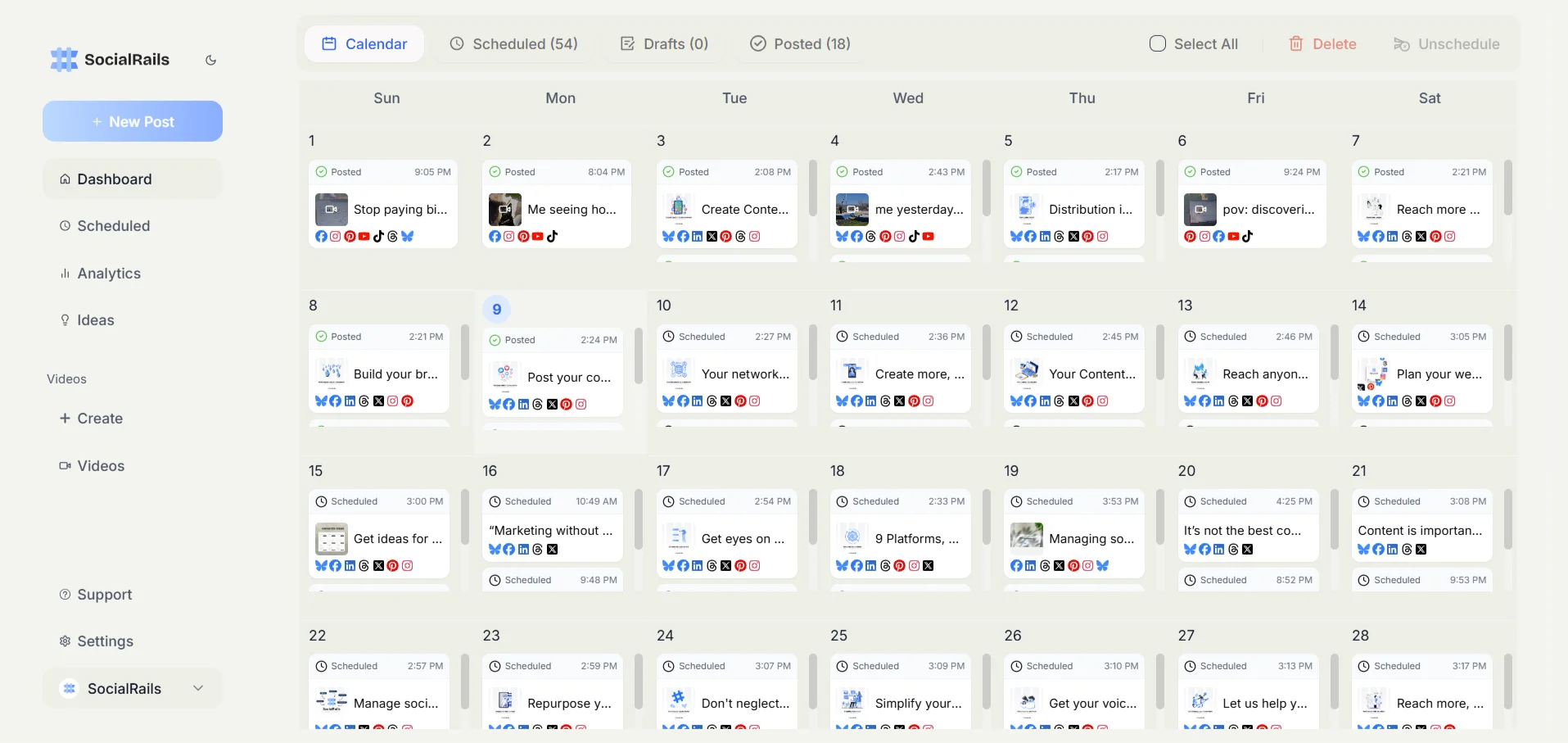
The Complete Social Media Campaign Template
1. Campaign Overview
2. Goal Setting (SMART Framework)
Every campaign needs measurable goals:
Common campaign goals:
- Increase brand awareness (reach, impressions)
- Drive website traffic (clicks, CTR)
- Generate leads (form fills, email signups)
- Increase engagement (comments, shares, saves)
- Drive sales (conversions, revenue)
In the SMART goal framework, what does the 'A' stand for?
3. Target Audience
Tip: Use your existing analytics to identify when your audience is most active. Check our best posting time calculator for platform-specific data.
4. Content Plan
Content pillars for your campaign:
- Educational (how-to, tips, tutorials)
- Entertaining (trends, memes, behind-the-scenes)
- Promotional (offers, launches, CTAs)
- Community (UGC, polls, Q&A)
5. Campaign Timeline
6. Budget Breakdown
Budget allocation rule of thumb:
- 60% paid advertising
- 20% content production
- 10% influencer/partnerships
- 10% tools and contingency
What's a common budget allocation rule for paid advertising in social media campaigns?
7. Performance Tracking
Social Media Campaign Examples by Type
Product Launch Campaign
- Duration: 4-6 weeks (2 weeks teaser, 2-4 weeks push)
- Platforms: Instagram, TikTok, Email
- Content mix: Teaser → Reveal → Reviews → UGC → Retarget
- Budget split: 70% ads, 20% influencer, 10% content
Brand Awareness Campaign
- Duration: 8-12 weeks
- Platforms: Instagram, YouTube, TikTok
- Content mix: Educational → Entertaining → Community → Viral
- Budget split: 50% ads, 30% content, 20% partnerships
Lead Generation Campaign
- Duration: 4-8 weeks
- Platforms: LinkedIn, Facebook, Instagram
- Content mix: Value posts → Lead magnet → Nurture → Convert
- Budget split: 60% ads, 25% content, 15% tools
Event Promotion Campaign
- Duration: 3-4 weeks pre-event, 1 week post-event
- Platforms: All relevant platforms
- Content mix: Announcement → Countdown → Live coverage → Recap
- Budget split: 50% ads, 30% content, 20% partnerships
Campaign Launch Checklist
Pre-Launch:
- Campaign goals defined and approved
- Target audience documented
- Content calendar complete
- All creative assets produced
- Ad accounts set up and funded (Meta Ads Manager, Google Ads)
- Tracking pixels and UTMs configured (Google Analytics)
- Landing pages tested
- Team roles assigned
Launch Day:
- All posts scheduled or published
- Ads activated
- Email blast sent
- Team notified
- Real-time monitoring active
Post-Campaign:
- Data collected and compiled
- Performance vs. goals analyzed
- ROI calculated
- Learnings documented
- Report shared with stakeholders
Tools to Run Your Campaign
FAQ
How long should a social media campaign run? Most campaigns run 2-8 weeks. Product launches need 4-6 weeks. Brand awareness campaigns work best at 8-12 weeks. Short promotional campaigns can run 1-2 weeks. For inspiration, see our social media campaign examples.
What's a good budget for a social media campaign? Start with $500-$2,000 for small campaigns. Mid-size campaigns typically need $2,000-$10,000. Scale based on your cost-per-result and ROI targets.
How many platforms should I use? Focus on 2-3 platforms where your audience is most active. Spreading across too many platforms dilutes effort. Quality on fewer platforms beats mediocre presence everywhere.
How do I measure campaign success? Track metrics tied to your specific goal. Awareness = reach and impressions. Engagement = comments and shares. Leads = signups and form fills. Sales = conversions and revenue. Our marketing ROI guide walks through this in detail.
Was this article helpful?
Let us know what you think!