Instagram Keywords Generator
Free keyword tool for Instagram SEO. Enter a topic and get 20 keyword ideas — broad, niche, and long-tail — for captions, bios, alt text, and Reels.
The tool produces 20 keyword ideas — a mix of broad, niche, and long-tail — from your topic. Nothing is stored.
How to Use Instagram Keywords (3 Steps)
Enter a specific topic
The sharper your topic, the sharper the keywords. “Pilates for back pain” beats “fitness.”
Pick 3–5 keywords
Mix one broad, two niche, and one long-tail. Tap the arrow next to any keyword to check the live Instagram search.
Place them in five spots
Caption, alt text, bio, Reel on-screen text, and Reel audio. Natural placement beats stuffing every time.
Where Instagram Reads Your Keywords
Five surfaces Instagram indexes. Using the same keyword across three or more is what moves you up in search.
| Surface | What Instagram reads | How to use it |
|---|---|---|
| Caption | All text, especially the first line | Lead with the primary keyword naturally |
| Alt text | Custom accessibility description | Advanced settings → Write alt text |
| Profile name | The bold line above your bio | “Jane · Pilates Coach” — name + keyword |
| Bio | The full 150-character bio | One keyword in the first line |
| Reel audio & overlays | Transcribed speech + on-screen text | Say the keyword, show it on screen, put it in the caption |
Broad, Niche, or Long-Tail — What to Mix
The generated list is split across three types. A good mix is one broad, two niche, and one long-tail.
Broad
Single-word or two-word keywords like “fitness” or “home decor.” Massive volume, massive competition.
Use: 1 per post, in the first line of the caption for topical context.
Niche
Two to three words, scoped to a subcategory: “mat pilates” or “minimalist home decor.” Lower volume, higher relevance.
Use: 2 per post. This is where the real engagement lives.
Long-tail
Three or more words with intent: “pilates routine for back pain,” “small living room ideas.” Low volume, high intent.
Use: 1 per post, woven naturally into the caption body.
Common Instagram Keyword Mistakes
Keyword stuffing
Listing 15 related terms in the caption reads like spam and dilutes the topical signal Instagram uses to route the post.
Hiding the keyword at line 5
Instagram weighs the first 125 characters of a caption more than the rest. Put the primary keyword in the first line.
Ignoring alt text
Alt text is readable by Instagram’s search and by screen readers. Skipping it leaves free real estate on the table.
Same keyword on every post
Identical keyword blocks across unrelated content get flagged as spam. Match keywords to each post’s actual topic.
Keyword ≠ topic
Using a trending keyword unrelated to your post hurts more than helps. Viewers bounce, watch-through tanks, and the next post gets suppressed.
No keyword in the Reel itself
Reels are transcribed. Say the keyword out loud, put it on-screen, and in the caption. Three reinforcing signals beat one.
Instagram Keywords Generator FAQ
Is the Instagram keywords generator really free?
Yes. No signup, no account, no watermark. Enter a topic, generate 20 keyword ideas, copy the ones you want.
How does the tool decide which keywords to generate?
It asks an AI to produce a mix of broad (high volume, high competition), niche (mid volume, topical audience), and long-tail (specific intent, lower competition) keywords for the topic you enter. The goal is a starting list you can refine, not a final answer.
Does the tool show real Instagram search volume?
No — and any tool claiming it does is guessing. Instagram doesn't expose public search-volume data. The most honest way to check volume is to open Instagram and search the keyword yourself. The arrow icon next to each keyword here takes you straight to the live search page.
What are Instagram keywords?
Words or short phrases Instagram uses to understand what a post, Reel, or profile is about. They show up in captions, alt text, your bio, Reel audio transcripts, and on-screen text. Unlike hashtags, keywords don't need a # — Instagram reads the plain words.
Where should I use Instagram keywords?
Five places: (1) the first line of your caption, (2) image alt text, (3) your profile name field and bio, (4) Reel descriptions and on-screen text, (5) Reel audio (the words you say are transcribed). Natural placement beats stuffing.
How many keywords should I use per post?
3–5 relevant keywords, integrated into the caption like normal sentences. Stuffing 15 related terms reads as spam and dilutes the topical signal Instagram uses to match you with the right audience.
What's the difference between keywords and hashtags on Instagram?
Keywords are plain words Instagram's search indexes from your caption, bio, alt text, and audio. Hashtags are tags prefixed with # that categorize the post on the hashtag page. Keywords have become more important since Instagram's keyword search expanded — but they work together, not against each other.
Do Instagram keywords help Reels get views?
Yes. Reels now surface in keyword search, and Instagram transcribes spoken audio plus reads on-screen text. Saying the keyword out loud in a Reel, putting it in the caption, and adding it as on-screen text are three signals working in the same direction.
Can I use the keywords as hashtags?
Yes — some of them. Keep hashtags to 3–5 relevant ones and pick from the shorter, more searchable items in the list. Long-tail keywords like "pilates for absolute beginners" don't make great hashtags — use them as caption text instead.
Why do generated keywords look generic?
If your topic is broad ("fitness"), the output will be broad. Specific topics produce sharper keywords — "pilates for back pain" generates more distinctive ideas than "exercise". Narrow the input and regenerate.
Is this an Instagram SEO tool?
It's one piece of Instagram SEO — keyword ideation. Full Instagram SEO also covers caption structure, bio optimization, alt text, profile name field, Reel audio and on-screen text, and posting cadence. The generated list gives you the words to use; where you use them is still your call.
Does the tool save my topic or results?
No. The topic is sent to generate keywords and nothing is stored afterward. Close the tab and the list disappears.
Complete Your Social Media Toolkit
Maximize your social media success with our other free tools
Create content, post everywhere
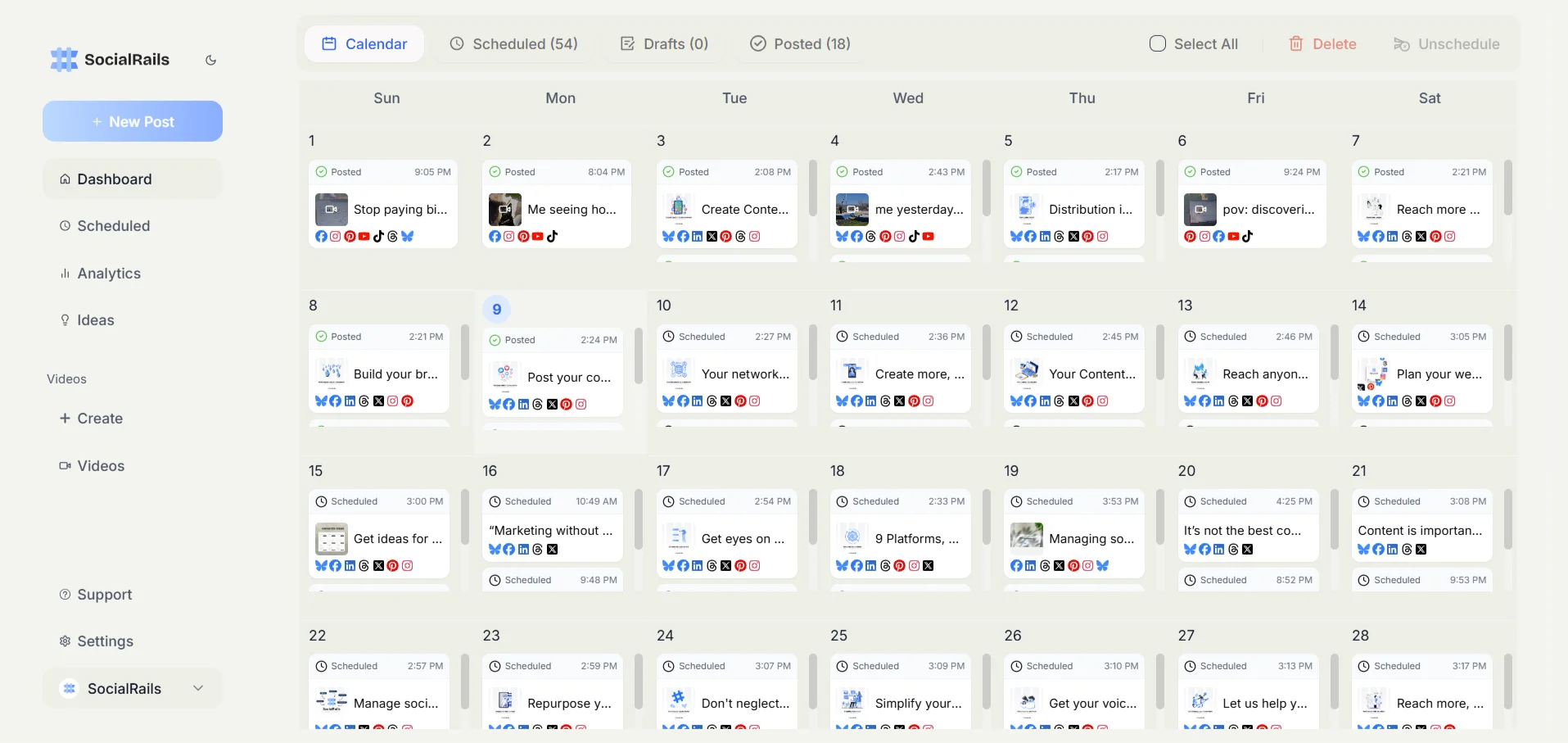
Create captions, images, and videos with AI. Schedule to 9 platforms in seconds.
Start your free trial