Free Keyword Extractor — Extract Keywords from Text
Paste any text and get ranked keywords and keyphrases in seconds
AI-powered, no signup, relevance-scored, and grouped by topic
Paste an article, blog post, or transcript — get the most relevant keywords ranked 0–100
Text to Analyze
0 characters · 0 words
Extracted Keywords
No keywords extracted yet
Enter text and click extract to see results
AI-Powered Analysis
Advanced algorithms identify the most relevant keywords
Relevance Ranking
Keywords ranked by importance and frequency
Smart Categorization
Keywords organized into meaningful topic groups
Perfect For:
SEO Optimization
- • Content analysis
- • Meta tag creation
- • Keyword research
- • SEO audits
Content Creation
- • Topic identification
- • Article tagging
- • Blog categorization
- • Content planning
Research & Analysis
- • Document analysis
- • Theme extraction
- • Text mining
- • Data categorization
Marketing
- • Campaign planning
- • Competitor analysis
- • Ad targeting
- • Trend identification
What is Keyword Extraction?
Keyword extraction is the process of automatically identifying the most important words and phrases from a piece of text. These keywords represent the core topics, themes, and concepts within your content. This technique is a subset of Natural Language Processing (NLP) and is used in search engines, content management systems, and text analysis tools.
Our keyword extractor uses NLP algorithms to analyze your text, filtering out common words (stop words) and identifying terms that carry the most semantic weight. The result is a ranked list of keywords that accurately represent your content.
How Keyword Extraction Differs from Keyword Research
Keyword extraction analyzes existing content to find what topics it covers.Keyword research involves finding terms people search for to create new content. Both are valuable for SEO—extraction helps you understand your current content, while research guides new content creation.
Learn More About Keyword Strategy
- • Google's SEO Starter Guide - Official guidelines on keyword usage
- • Moz Beginner's Guide to SEO - Comprehensive keyword strategy guide
- • Ahrefs Keyword Research Guide - Advanced keyword research techniques
How to Use Extracted Keywords
For SEO Optimization
- • Add top keywords to your page title and meta description
- • Include keywords naturally in headings (H1, H2, H3)
- • Use keywords in image alt text and file names
- • Create internal links using keyword-rich anchor text
- • Check keyword density (aim for 1-2% occurrence)
For Content Strategy
- • Identify content gaps by comparing extracted keywords
- • Create topic clusters around related keywords
- • Generate blog post ideas from keyword categories
- • Improve content relevance by ensuring key topics are covered
- • Tag and categorize content for better organization
Types of Keywords Extracted
Single Keywords
Individual words that represent core concepts. Examples: "marketing", "software", "business"
Keyphrases (2-3 words)
Multi-word terms that are more specific. Examples: "content marketing", "social media strategy"
Long-tail Keywords
Longer, more specific phrases. Examples: "how to improve website SEO", "best marketing tools"
Frequently Asked Questions
How does the keyword extractor work?
What types of text can I analyze?
How are keywords ranked by relevance?
Can I use extracted keywords for SEO?
What's the difference between keywords and keyphrases?
How many keywords should I extract?
What are stop words and why are they filtered?
Is the keyword extractor free to use?
How to Extract Keywords from Text (3 Steps)
Paste Your Text
Drop in any article, blog post, transcript, or document — at least 50 characters. Longer and more focused text extracts better keywords.
Choose How Many Keywords
Pick 5, 10, or 20 keywords. Use fewer for quick topic checks, more for SEO research or content briefs.
Copy the Ranked Keywords
Get keywords with 0–100 relevance scores and topic groups. Copy individual keywords or the full list.
What You Can Do With Extracted Keywords
Audit a competitor's article
Paste a competitor's blog post and see exactly which keywords and keyphrases it targets. Spot gaps your version should cover.
Build an SEO content brief
Extract the dominant keywords from top-ranking pages and hand your writer a brief with the must-cover terms.
Generate meta tags and descriptions
Turn your own draft into a short list of keywords for meta tags, Open Graph tags, and structured data.
Tag a CMS or knowledge base
Paste an article and get tag suggestions — useful for content platforms, documentation sites, and support knowledge bases.
Surface topics from a transcript
Drop in a podcast or video transcript and get the core topics — handy for episode descriptions, chapter titles, and repurposed content.
Seed social media hashtags
The top keyphrases make strong hashtag candidates for Instagram, LinkedIn, and TikTok captions.
Summarize customer feedback
Paste a batch of reviews or support tickets to surface the themes customers keep repeating — at a glance.
Build topic clusters
Extract keyphrases across 5–10 related articles and group them into hub-and-spoke topic clusters for your content strategy.
What the Keyword Extractor Returns
Single-word keywords
Core nouns and verbs that appear throughout the text — the atomic units of the topic.
Multi-word keyphrases
Two-to-five-word phrases that usually reflect real search intent (e.g. “content marketing strategy”).
Relevance scores (0–100)
Each keyword gets a score you can sort by. 80+ = central topic. 50–79 = supporting theme. Below 50 = peripheral.
Topic categories
Keywords are grouped by theme so you can see the text's sub-topics at a glance.
Copy-ready output
Every keyword has a one-click copy button. The full list is easy to paste into a brief or CMS tag field.
Adjustable count
Pick 5, 10, or 20 per run — match the list length to whether you're scanning or building a full brief.
Tips for Better Keyword Extraction
Paste clean body text
Skip the navigation, footer, “related articles,” and author bio. Signal-to-noise matters — a clean paste produces sharper keywords.
Keep it focused on one topic
Multi-topic articles dilute the keyword list. For best results, paste one article at a time — not a whole news digest.
Aim for 150+ words
The 50-character minimum works, but a paragraph or two gives the AI enough context to rank accurately. Longer = better.
Run it twice for comparison
Run with 5 keywords for the most-central terms, then run with 20 for the long tail. You'll see which terms hold across both.
Compare multiple sources
Extract keywords from 3–5 competing articles on the same topic. Keywords that appear across all of them are usually the must-cover terms.
Trust keyphrases over single words
Keyphrases (e.g. “keyword extraction tool”) usually reflect real search intent better than single words (“tool”). Prioritize phrases in your brief.
Keyword Extractor vs. Keyword Research Tool
These two tools sound similar but answer different questions. Both are useful — the trick is knowing which one you need.
| Job | Keyword Extractor (this tool) | Keyword Research Tool |
|---|---|---|
| Input | A block of text you paste | A seed keyword |
| Output | Keywords the text is about | Search volume, difficulty, related terms |
| Best for | Auditing content, building briefs, tagging | Picking topics to target |
| Use them together? | Yes — extract keywords from top-ranking pages to learn what to cover, then validate the terms in a keyword-research tool. | |
Frequently Asked Questions
Is the keyword extractor really free?
100% free. No signup, no account, no paywall, no watermark. Paste your text, pick how many keywords you want (5, 10, or 20), and get ranked keywords instantly.
Do I need to sign up or log in?
No. The keyword extractor runs in your browser — open the page, paste your text, and extract keywords. There is no account, no credit card, and no registration.
How does the AI keyword extractor work?
You paste text — an article, a blog post, a transcript, or any document — and the AI analyzes word frequency, context, and topical relevance to surface the most important keywords and keyphrases. Each keyword gets a relevance score from 0 to 100 and is grouped by topic category.
How many keywords does the tool extract?
You choose — 5, 10, or 20 keywords per extraction. Shorter lists are best for quick topic scans; longer lists are better for SEO research, content outlines, or tagging.
What does the relevance score mean?
Relevance is a 0–100 score estimating how central a keyword is to the text. A score of 80+ means the keyword captures a core topic of the passage. A score of 30–50 means it is present but peripheral. Use relevance to decide which keywords to target first.
What counts as a keyword vs. a keyphrase?
A keyword is a single word (e.g. "marketing"). A keyphrase is a multi-word term (e.g. "content marketing strategy"). The extractor returns both — keyphrases are often more useful for SEO and content because they reflect real search intent.
What is the minimum text length I can paste?
At least 50 characters, which is roughly a sentence or two. For meaningful results, we recommend pasting 150 words or more. The longer and more focused the text, the better the extraction.
What types of text work best with the keyword extractor?
Articles, blog posts, product descriptions, meeting transcripts, YouTube video transcripts, research papers, customer reviews, and support tickets all work well. Anything that contains natural-language content more than a few sentences long.
Can I extract keywords from a website or URL?
The current tool works on text you paste in, not URLs directly. To extract keywords from a web page: open the page, select and copy the main article text (Ctrl+A / Cmd+A to select everything, then paste), and run the extractor. This lets you skip the navigation and footer noise and focus on the actual content.
Can I use the tool for SEO keyword research?
Yes — but note its purpose. This tool extracts the keywords a given text is already about; it is not a search-volume tool. Typical SEO uses: audit what keywords your competitor's article is targeting, find gaps in your own article, generate tag suggestions, and build topic clusters. For search-volume and difficulty, pair it with a dedicated keyword-research tool.
Does the keyword extractor work with non-English text?
It works best in English. Other major languages (Spanish, French, German, Portuguese, Italian, Dutch) usually return sensible results, but quality varies. Very short text or mixed-language text may return weaker output.
Can I use the extracted keywords commercially?
Yes. The keywords you extract are yours to use freely — for SEO, ads, content briefs, meta tags, social captions, tagging, or any commercial purpose.
How is this different from a word-frequency counter?
A word-frequency counter just tallies how often each word appears. This keyword extractor uses AI to weight frequency against context and topical importance, so common filler words ("the", "and", "which") drop out and genuinely meaningful phrases rise to the top.
Can I copy or export the keywords?
Yes. Each keyword has a copy button, and you can copy the whole list at once. The tool is designed to drop straight into your SEO brief, CMS tag field, or social-media post.
Complete Your Social Media Toolkit
Maximize your social media success with our other free tools
AI Facebook Post Generator
Generate complete Facebook posts with AI for any business or personal use
AI Instagram Post Generator
Create engaging Instagram posts with captions, hashtags, and CTAs
AI LinkedIn Post Generator
Generate professional LinkedIn posts for thought leadership and engagement
Create content, post everywhere
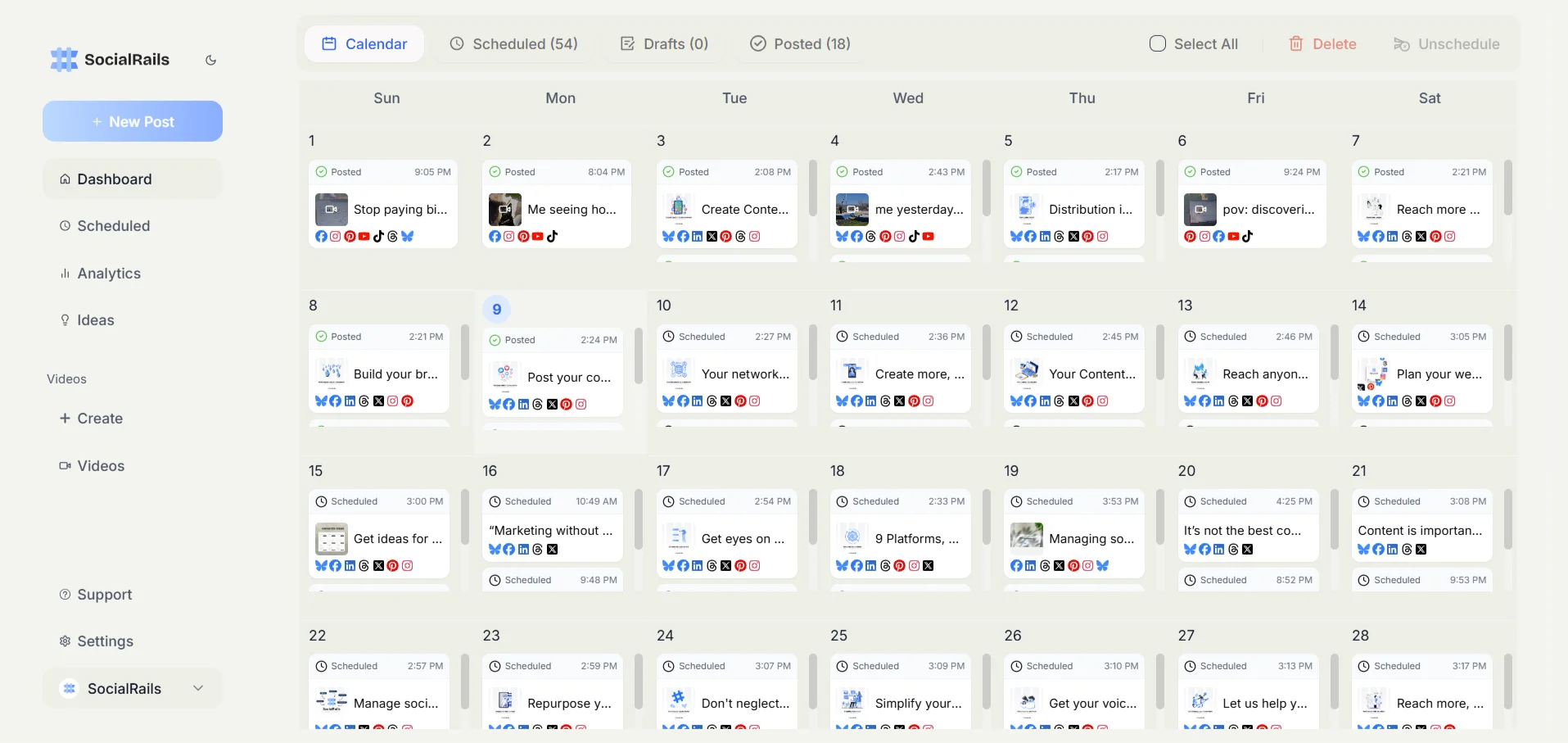
Create captions, images, and videos with AI. Schedule to 9 platforms in seconds.
Start your free trial