Not all social media platforms work the same way. Some are built for sharing photos, others for having conversations, and others for selling products directly. Understanding the different types helps you pick the right platforms instead of wasting time on ones that don't fit your goals.
Below is a breakdown of every major type of social media, with real examples, what each one is best for, and how businesses and creators actually use them.
Quick Overview: The 13 Types of Social Media
1. Social Networking Platforms
What they are: Platforms built around personal profiles, friend connections, and news feeds. These are the "classic" social media platforms most people think of first.
Examples: Facebook, Instagram, LinkedIn, Threads
How they work: You create a profile, connect with people, and share updates. The platform's algorithm decides what shows up in your feed based on your behavior and connections.
Why they matter: Social networks remain the broadest way to reach people online. Facebook alone has over 3 billion monthly active users according to Meta's earnings reports. For businesses, these platforms offer detailed advertising tools that let you target people by interests, demographics, and behavior.
Best for:
- Building brand awareness with a broad audience
- Running paid advertising campaigns
- Customer service through pages and messaging
- Community building through groups and events
How brands use them: A local restaurant might use Facebook to promote daily specials and respond to reviews, while a B2B software company uses LinkedIn to share thought leadership content and generate leads. The key is matching the platform to where your audience already spends time.
2. Media Sharing Platforms
What they are: Platforms where the primary content is visual — photos, graphics, illustrations, and infographics.
Examples: Instagram, Pinterest, Flickr, VSCO, Behance
How they work: Content is organized visually rather than chronologically. Discovery happens through search, hashtags, and recommendation algorithms that surface visually similar content.
Why they matter: Visual content consistently drives higher engagement than text-only posts. Pinterest, for example, functions as a visual search engine — people use it to plan purchases, find recipes, and discover design ideas. According to Pinterest's business resources, users on the platform are actively looking for things to buy or try, making it uniquely high-intent compared to other social platforms.
Best for:
- E-commerce product showcasing
- Lifestyle, fashion, food, and design brands
- Portfolio building for creatives and photographers
- Driving website traffic through visual content
How brands use them: Interior design companies use Pinterest to create boards of completed projects, driving traffic back to their website. Photographers build portfolios on Flickr or VSCO. Fashion brands use Instagram to showcase new collections with shoppable tags.
3. Short-Form Video Platforms
What they are: Platforms centered on vertical videos typically under 3 minutes, designed for quick consumption and sharing.
Examples: TikTok, Instagram Reels, YouTube Shorts, Snapchat Spotlight
How they work: Content is served algorithmically — your videos can reach people who don't follow you, based on how the first viewers engage. This makes short-form video one of the few formats where a brand-new account can go viral.
Why they matter: Short-form video has become the dominant content format for discovery. TikTok's recommendation algorithm, in particular, is built to surface content from unknown creators, giving small accounts a realistic chance of reaching large audiences.
Best for:
- Reaching younger audiences (particularly Gen Z and younger millennials)
- Product demonstrations and tutorials
- Behind-the-scenes content
- Trend-based marketing and cultural relevance
How brands use them: A skincare brand might post a 30-second routine using their products on TikTok. A SaaS company might create quick tutorial clips showing a feature in action. The format rewards authenticity over polish — content that feels "real" tends to outperform highly produced ads.
Tips for success:
- Hook viewers in the first 1-2 seconds
- Use trending sounds when relevant to your niche
- Post consistently (the algorithm rewards regular activity)
- Optimize for completion rate — shorter videos that get rewatched perform well
4. Long-Form Video Platforms
What they are: Platforms built for longer video content, typically ranging from a few minutes to hours.
Examples: YouTube, Vimeo, Dailymotion
How they work: YouTube functions as both a social platform and the world's second-largest search engine. People actively search for how-to videos, reviews, and educational content. Videos are discovered through search, recommendations, and subscriptions.
Why they matter: Long-form video builds deeper trust than short-form because viewers invest more time with your content. YouTube videos also have a much longer shelf life — a well-optimized video can drive traffic for years, unlike a social media post that disappears from feeds within hours.
Best for:
- Educational content and tutorials
- Product reviews and comparisons
- Building authority in a specific topic
- Long-term organic traffic through search
How brands use them: A project management tool might create a series of "how to manage remote teams" videos. A fitness brand might publish full workout routines. The key difference from short-form: long-form video works best when it thoroughly answers a specific question or teaches something valuable.
5. Messaging Apps
What they are: Platforms built primarily for private, one-to-one or group communication.
Examples: WhatsApp, Telegram, Facebook Messenger, Signal, Discord, Slack
How they work: Unlike public social networks, messaging apps center on direct, private conversations. Many have expanded to include features like channels (Telegram), community servers (Discord), and business messaging tools.
Why they matter: More messages are sent through private messaging apps than posted publicly on social media. WhatsApp has over 2 billion users globally according to WhatsApp's about page. For businesses, messaging apps represent a direct line to customers — with higher open rates than email.
Best for:
- Customer support and service
- Building close-knit communities (Discord servers, Telegram groups)
- Direct sales conversations
- Internal team communication (Slack, Discord)
How brands use them: Many e-commerce brands now offer WhatsApp as a customer support channel. Discord has become essential for gaming communities, crypto projects, and creator fan bases. Telegram channels work well for broadcasting updates to subscribers.
6. Discussion Forums and Q&A Platforms
What they are: Platforms organized around topics and conversations rather than individual profiles.
Examples: Reddit, Quora, Stack Overflow, GitHub Discussions
How they work: Users post questions, links, or discussions within topic-specific communities (like subreddits on Reddit). Content rises or falls based on community votes, not an algorithm optimizing for ad revenue.
Why they matter: Forums are where people go for honest, unfiltered opinions. Reddit, in particular, has become a trusted source — you'll often see "reddit" appended to Google searches by people looking for genuine recommendations. Stack Overflow is the go-to resource for developers worldwide.
Best for:
- Market research and understanding customer pain points
- Building credibility through helpful answers
- Niche audience targeting through specific communities
- SEO (Reddit and Quora answers frequently rank in Google)
How brands use them: The most effective approach on forums is contributing genuine value, not promoting. A cybersecurity company might answer questions on r/netsec. A SaaS founder might share lessons learned on relevant subreddits. Direct promotion is usually downvoted or banned — these platforms reward helpfulness.
7. Microblogging Platforms
What they are: Platforms designed for short-form text updates, links, and quick commentary.
Examples: X (formerly Twitter), Threads, Bluesky, Mastodon
How they work: Users post short updates that appear in a chronological or algorithmic feed. The format encourages real-time conversation, news commentary, and quick takes. Hashtags and trending topics help content surface beyond your followers.
Why they matter: Microblogging platforms are where news breaks first and public conversations happen in real time. They're uniquely suited for building a personal brand through thought leadership — sharing insights, engaging in industry discussions, and building a public track record of expertise.
Best for:
- Real-time communication and news
- Thought leadership and personal branding
- Networking with industry peers
- Customer service and public-facing support
- Driving traffic to long-form content
How brands use them: Tech companies use X to announce product updates and engage with users directly. Journalists and creators use Threads or Bluesky to build audiences in the growing decentralized social space. The key is consistent engagement — these platforms reward people who show up and contribute to conversations regularly.
8. Live Streaming Platforms
What they are: Platforms for broadcasting real-time video content to an audience that can interact through live chat.
Examples: Twitch, YouTube Live, Facebook Live, Instagram Live, TikTok Live, Kick
How they work: A creator broadcasts live, and viewers watch and interact simultaneously through chat, reactions, and virtual gifts. Many platforms allow viewers to financially support streamers through subscriptions, donations, or virtual currency.
Why they matter: Live streaming creates a sense of immediacy and authenticity that pre-recorded content can't match. Viewers feel like they're part of something happening right now, which drives higher engagement and stronger community bonds.
Best for:
- Gaming and entertainment content
- Product launches and demonstrations
- Q&A sessions and webinars
- Building a loyal, engaged community
- Real-time event coverage
How brands use them: A cosmetics brand might host a live tutorial with a makeup artist on Instagram Live. A tech company might stream a product announcement on YouTube Live. Twitch has expanded well beyond gaming — categories like "Just Chatting," cooking, and music are growing rapidly.
9. Social Commerce Platforms
What they are: Platforms where shopping is integrated directly into the social experience — users can discover, browse, and buy products without leaving the app.
Examples: TikTok Shop, Instagram Shopping, Facebook Marketplace, Pinterest Shopping, Amazon Live, Whatnot
How they work: Products are tagged in posts, videos, and live streams. Users can tap to view product details and complete a purchase within the platform. Discovery happens through the same algorithms that surface regular content.
Why they matter: Social commerce removes friction from the buying process. Instead of seeing a product, leaving the app, searching for it on a website, and checking out — everything happens in one place. This is especially powerful when combined with influencer content and live shopping events.
Best for:
- Direct-to-consumer brands
- Fashion, beauty, and lifestyle products
- Impulse purchase categories
- Brands with strong visual content
- Leveraging influencer partnerships for sales
How brands use them: Small businesses have built entire revenue streams through TikTok Shop by creating content around their products. Facebook Marketplace serves as a local classifieds alternative. Pinterest Shopping works particularly well for home decor and fashion because users are already in a "planning to buy" mindset.
10. Professional Networking Platforms
What they are: Platforms designed specifically for career development, business networking, and professional content.
Examples: LinkedIn, Wellfound (formerly AngelList Talent), Xing, Glassdoor
How they work: Users create professional profiles (essentially digital resumes), connect with colleagues and industry peers, and share business-related content. LinkedIn also functions as a major job marketplace and B2B advertising platform.
Why they matter: LinkedIn is the dominant platform in this category, with over 900 million members according to LinkedIn's about page. For B2B companies, it's often the highest-ROI social platform because the audience is already in a professional mindset.
Best for:
- B2B marketing and lead generation
- Recruiting and employer branding
- Thought leadership and industry authority
- Professional development and networking
- Job searching and career growth
How brands use them: B2B SaaS companies use LinkedIn for content marketing and lead generation. Recruiters use it to find candidates. Individual professionals use it to build personal brands — posting industry insights, sharing career lessons, and engaging with peers. The algorithm currently favors native content (especially text posts and carousels) over external links.
11. Creator Economy Platforms
What they are: Platforms built to help content creators monetize their work directly through subscriptions, digital products, and fan support.
Examples: Patreon, Substack, Gumroad, Ko-fi, Buy Me a Coffee, Kajabi, ConvertKit
How they work: Creators offer content or products directly to their audience, usually through subscriptions or one-time purchases. These platforms handle payments, delivery, and subscriber management. The creator sets the price and keeps most of the revenue (minus a platform fee).
Why they matter: Creator economy platforms shift the power dynamic. Instead of relying on ad revenue or brand deals (which are controlled by algorithms and sponsors), creators earn directly from the people who value their work. This creates more sustainable income for creators and a closer relationship with their audience.
Best for:
- Writers and journalists (Substack)
- Artists and podcasters (Patreon, Ko-fi)
- Course creators and educators (Kajabi, Gumroad)
- Any creator wanting recurring revenue from their audience
How creators use them: A journalist might offer a free weekly newsletter on Substack with a paid tier for in-depth analysis. A podcast host might use Patreon for bonus episodes and behind-the-scenes content. A designer might sell templates on Gumroad. The common thread: offering something valuable enough that people are willing to pay.
12. Review and Rating Platforms
What they are: Platforms where users share opinions, ratings, and reviews about businesses, products, or services.
Examples: Yelp, TripAdvisor, Glassdoor, G2, Trustpilot, Google Reviews, Amazon Reviews
How they work: Users leave ratings (usually 1-5 stars) and written reviews based on their experiences. Other users read these reviews to make purchasing decisions. Businesses can claim profiles and respond to reviews.
Why they matter: Reviews directly influence purchasing decisions. According to various consumer surveys, the vast majority of consumers read online reviews before buying from a local business or choosing a software product. Google Reviews in particular affect local search rankings.
Best for:
- Local businesses (Yelp, Google Reviews, TripAdvisor)
- SaaS and B2B products (G2, Trustpilot, Capterra)
- Employer branding (Glassdoor)
- Building trust and social proof
How brands use them: Smart businesses actively manage their review presence — responding to both positive and negative reviews, encouraging satisfied customers to leave feedback, and using review insights to improve their products. Ignoring review platforms means letting others control your reputation.
13. Niche Community Platforms
What they are: Platforms built around a specific interest, hobby, or profession — serving a focused community rather than a general audience.
Examples:
- Fitness: Strava, Fitbit Community
- Reading: Goodreads, Bookstagram (Instagram subcommunity)
- Design: Behance, Dribbble
- Gaming: Discord servers, Steam Community
- Music: SoundCloud, Bandcamp
- Academia: ResearchGate
- Neighborhoods: Nextdoor
How they work: These platforms offer specialized features tailored to their community — Strava tracks running and cycling routes, Goodreads tracks reading goals, Behance showcases design portfolios. The smaller, focused audience means higher engagement and more relevant connections.
Why they matter: While major platforms serve everyone, niche platforms serve specific communities deeply. The audience on a niche platform is pre-qualified — if someone is on Strava, they care about fitness. If they're on Dribbble, they care about design. This makes these platforms valuable for targeted marketing and authentic community building.
Best for:
- Reaching a highly specific audience
- Building authority within a specialized field
- Connecting with passionate community members
- Marketing products directly relevant to the niche
How to Choose the Right Types of Social Media for Your Goals
Trying to be everywhere is a common mistake. Most businesses and creators are better off focusing on 2-3 platforms that align with their goals and audience.
Step 1: Start with your audience. Where do they already spend time? If you're targeting professionals, LinkedIn makes sense. If you're reaching Gen Z consumers, TikTok and Instagram are more relevant. Don't guess — look at your existing customer data or simply ask them.
Step 2: Match the content format to your strengths. If you're great on camera, prioritize video platforms. If you write well, consider microblogging or Substack. If your product is visual, focus on media sharing and social commerce platforms. Playing to your strengths means you'll actually create content consistently.
Step 3: Consider your goals.
Step 4: Start small and expand. Master one or two platforms before adding more. A strong presence on two platforms will always outperform a weak presence on six.
Types of Social Media: Key Trends Right Now
Social commerce is accelerating. More purchases are happening directly inside social apps. TikTok Shop in particular has grown rapidly, blending entertainment content with instant purchasing.
Short-form video dominates discovery. TikTok, Reels, and Shorts have changed how people find new brands and products. Even platforms not built for video (like LinkedIn) are pushing video content in their algorithms.
Private communities are growing. There's a shift from public posting to private groups and messaging. Discord servers, WhatsApp groups, and Telegram channels are where many of the most engaged communities now live.
AI is changing content creation. Platforms are integrating AI tools for writing captions, editing videos, and generating images. This lowers the barrier to creating content but also raises the bar for standing out.
Decentralized platforms are emerging. Bluesky, Mastodon, and other decentralized networks offer alternatives to algorithm-driven platforms. Adoption is still early, but growing — particularly among users concerned about data privacy and platform control.
Frequently Asked Questions
What are the main types of social media?
The main types of social media are: social networking platforms (Facebook, Instagram), media sharing (Pinterest, Flickr), short-form video (TikTok, Reels), long-form video (YouTube), messaging apps (WhatsApp, Telegram), discussion forums (Reddit, Quora), microblogging (X, Threads), live streaming (Twitch), social commerce (TikTok Shop), professional networking (LinkedIn), creator economy platforms (Patreon, Substack), review platforms (Yelp, G2), and niche community platforms (Strava, Goodreads).
How many types of social media are there?
There are 13 widely recognized types of social media, though the exact number varies depending on how you categorize them. Some sources list as few as 5 broad categories, while others break them down into 15 or more specific types. The 13-type framework covers every major way people interact socially online.
What is the most popular type of social media?
Social networking platforms have the largest user base overall, with Facebook being the single largest platform globally. However, short-form video platforms like TikTok have the fastest growth and highest engagement rates, especially among younger users.
What type of social media is best for business?
It depends on your business type. B2B companies typically see the best results on LinkedIn and through discussion forums. B2C brands often perform best on Instagram, TikTok, and Facebook. E-commerce businesses should prioritize social commerce platforms like TikTok Shop and Instagram Shopping. The best platform is where your customers already spend their time.
What is the difference between social media and social networking?
Social media is the broader term — it covers all platforms where people create and share content online. Social networking is one specific type of social media focused on building connections between people (like Facebook and LinkedIn). All social networking is social media, but not all social media is social networking. YouTube, for example, is social media but not primarily a social network.
What are examples of niche social media platforms?
Niche social media platforms serve specific interests or communities. Examples include Strava (running and cycling), Goodreads (books and reading), Behance and Dribbble (design), Nextdoor (local neighborhoods), ResearchGate (academics), and SoundCloud (music). These platforms offer more targeted communities than general-purpose social networks.
Related Resources
- Top 100 Social Media Platforms Guide
- Social Media Strategy Guide
- Social Media Analytics Tool
- Content Calendar Generator
- Hashtag Research Tool
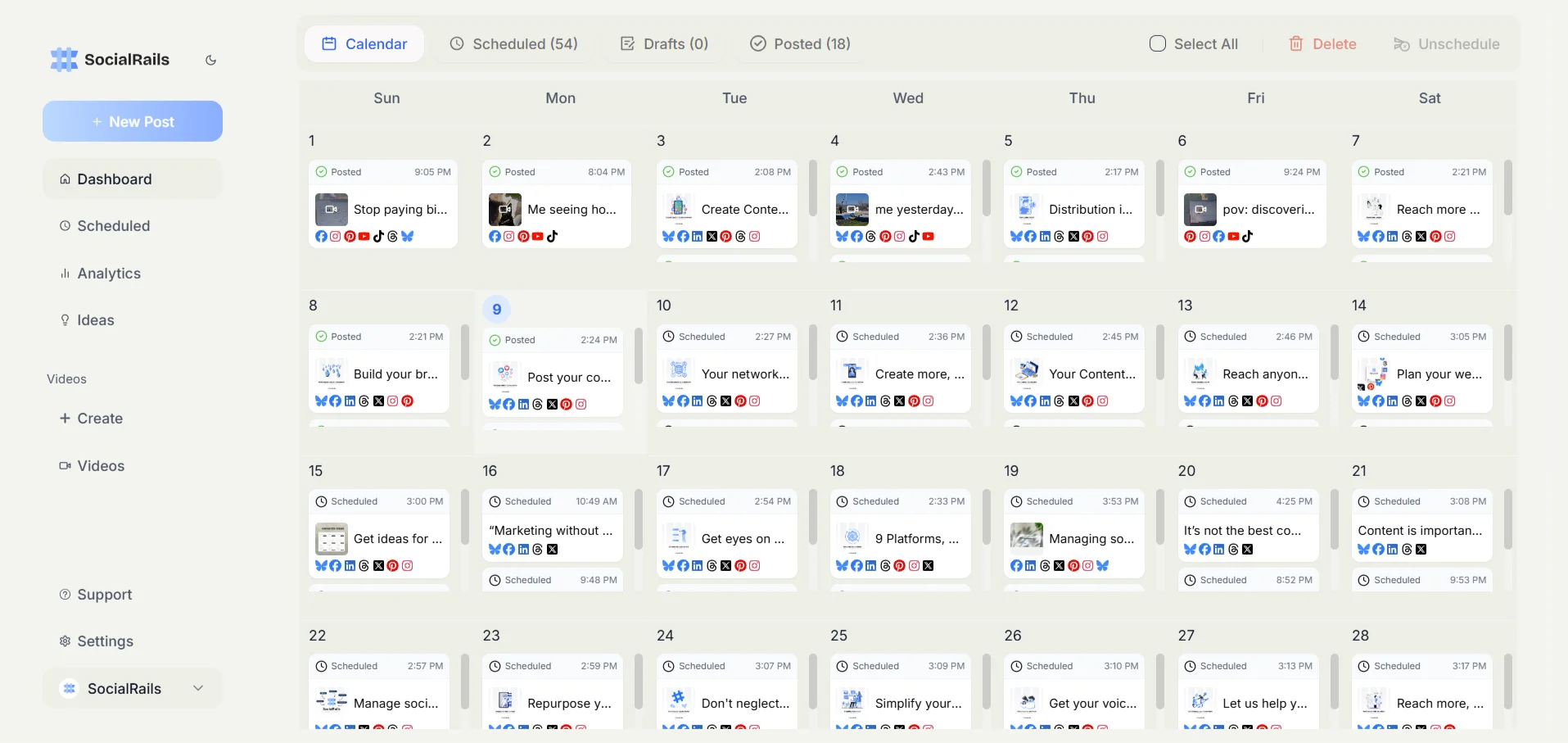
Want to manage all your social media platforms from one place? Start your free 3-day SocialRails trial to schedule posts, track analytics, and manage engagement across every platform type.