

Facebook Algorithm Words to Avoid: What Meta Actually Demotes

What Meta Actually Demotes, and What Is Folklore
Most "Facebook banned words" lists, including earlier versions of this page, mix one real policy with a lot of invention. Worth separating them before you rewrite anything.
Documented and real: engagement bait. In December 2017 Meta announced it would demote posts that explicitly ask for interaction, naming five types: vote baiting, react baiting, comment baiting, tag baiting and share baiting. Meta also said Pages that do it repeatedly see larger drops than a single post would. This is a machine-learning classifier trained on hundreds of thousands of reviewed posts, so it reads the ask, not a keyword.
Also documented: clickbait, meaning headlines that withhold information or exaggerate to force a click. Same principle, same reason.
Not documented: a banned word list. Meta has never published one, and there is no evidence that words like "FREE", "buy now", "limited time" or "click here" trigger a Facebook demotion. That list is email spam-filter folklore, transplanted onto Facebook. Those really are classic email spam triggers; they are not Facebook policy.
Also not real: percentages. Earlier versions of this page opened with "reduce your post reach by up to 80%" and later gave a table converting a word count into a reach penalty. Meta has never published any such figure, and reach is not calculated that way. Both have been removed rather than adjusted.
The practical takeaway is smaller but actually true: rewrite the request, not the vocabulary. A post that says "tell me what you'd do" is fine. A post that says "COMMENT YES if you agree" is engagement bait no matter which synonyms you use, and swapping "free" for "complimentary" achieves nothing at all.
Phrasing That Is Genuinely Demoted
Engagement Bait Words
Never Use:
- "Like if you..."
- "Share if you agree"
- "Comment with..."
- "Tag someone who..."
- "Vote with reactions"
- "1 like = 1 prayer"
- "Type YES if..."
- "React if you..."
Use Instead:
- "What do you think about..."
- "Have you experienced..."
- "What's your opinion on..."
- "Tell us about..."
- "We'd love to hear..."
- "Share your thoughts"
- "What works for you?"
- "Your experience?"
Clickbait Phrases
Never Use:
- "You won't believe..."
- "This will shock you"
- "Doctors hate this"
- "One weird trick"
- "What happened next..."
- "Number 5 will amaze you"
- "This changes everything"
Use Instead:
- "Here's what we learned"
- "New research shows"
- "Expert tips for"
- "Proven method"
- "Step-by-step guide"
- "5 ways to improve"
- "Important update"
- "Latest announcement"
- "Popular right now"
Two entries were removed from this list: "Breaking news" and "Going viral". Neither is clickbait. If you are a publisher and something is genuinely breaking, saying so is accurate reporting, and the demotion policy targets headlines that withhold or exaggerate, not urgent ones that are true. The test is whether the headline tells the reader what the post is about. "You won't believe what happened" deliberately does not. "Breaking: council approves the budget" does.
The "Spam Trigger Words" List Is From Email, Not Facebook
This page used to carry three more categories: spam triggers ("FREE" in caps, "buy now", "limited time", "act now", "click here", "100% guaranteed"), misleading content words ("fake news", "conspiracy", "censored", "banned", "exposed"), and contest red flags ("contest", "sweepstakes", "raffle"). They have been removed, and it is worth saying why rather than quietly dropping them.
They came from email deliverability guides. Those are real spam-filter triggers for inbox providers, and somebody transplanted the list to Facebook where it has no basis. Meta publishes no banned vocabulary.
The substitutions were worse than the list. The advice was to replace "fake news" with "research findings", "censored" with "not available", and "conspiracy" with "analysis". Those are not synonyms. Following them does not make a post safer, it makes it mean something else, and in the case of a post actually about censorship it makes the post incoherent.
"Contest" and "sweepstakes" are the clearest example of the cost. Facebook has real Promotions policies governing how you run a giveaway, including that you must not require sharing to a personal timeline or tagging friends to enter. That last part is genuine and matters, because "share to win" and "tag to enter" really are against policy, not because of the words but because of the mechanic. Telling people to call it a "celebration" instead of a "contest" hides the actual rule behind a euphemism and leaves them running a non-compliant promotion with a nicer name.
If you run promotions on Facebook, read the Promotions policy rather than a word list.
How Facebook Detects Engagement Bait
Create content, post everywhere
Create captions, images, and videos with AI. Schedule to 9 platforms in seconds.
Start your free trial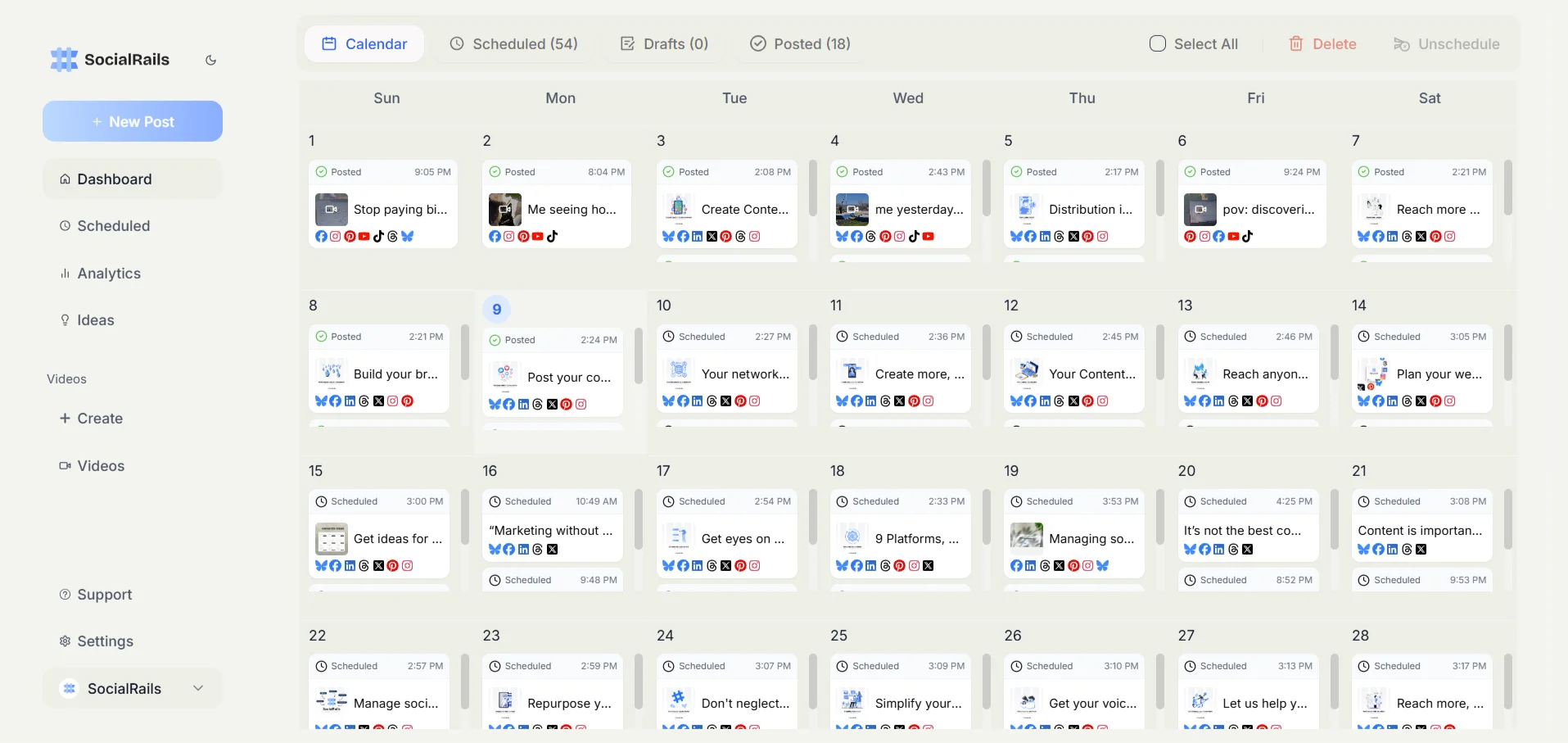
It is a classifier, not a filter, and that distinction is the whole point. Meta trained a model on hundreds of thousands of posts its teams reviewed and categorised by hand. It is reading what the post is doing, not scanning for strings, which is why a word list was never going to be the answer:
- It reads the ask, not the vocabulary. "Comment YES" and "reply with a yes if this is you" are the same instruction and get treated the same way
- It works across languages, so translating the bait does not evade it
- User behaviour feeds back in. Whether people hide, report, or bounce off a post matters more than any phrase in it
- Repetition is weighted. Meta was explicit that Pages doing this systematically face steeper reductions than a one-off post
Impact on Your Reach
There is no published penalty scale, and this page used to invent one. It previously showed a table converting a count of "trigger words" into a reach reduction: 1-2 words meant 20-30%, 3-5 meant 40-60%, 6 or more meant 70-95%. None of that came from Meta, and it cannot be right in principle, because reach is not computed by counting words in a post.
What Meta has said is directional and unquantified: engagement bait posts are shown to fewer people, and Pages that use it repeatedly see larger reductions than any single post causes. That last point is the useful one, because it means the risk is a habit rather than a slip.
There is also no "algorithm score" to reset. This page previously gave an eight-week recovery protocol for one, including replying to every comment within an hour. No such score exists, no such countdown is running, and there is nothing to serve out. If a post was demoted, that post was demoted; your next post is judged on its own.
Page Quality is a real thing and a different thing. In Meta Business Suite it reports actual policy violations and restrictions on your Page. It has nothing to do with word choice, and it is worth checking precisely because it shows real problems rather than imagined ones.
Industry Examples: What Is Actually Worth Changing
This section used to be a swap table telling e-commerce Pages to write "Shop the collection" instead of "Buy now", services to say "Complimentary session" instead of "Free consultation", and non-profits to say "Support our cause" instead of "Donate now". Almost none of that is worth doing, because the original phrases were never penalised. "Buy now" on a shop's post is clear, honest and fine.
Only one row in the old table pointed at something real, and it was the one about asking:
The pattern: what gets demoted is instructing people to interact, especially where the interaction is disconnected from the content. What is fine is writing something people want to respond to and inviting a response normally.
A note for non-profits specifically, since the old advice hit them hardest. "Donate now", "urgent" and "help us" are not penalised words, and a charity with a genuinely time-critical appeal should say so plainly. Softening it to "time-sensitive" costs clarity and buys nothing. The only thing to avoid is "share to spread", and only because it is an instruction to share.
Best Practices for Clean Posts
- Write naturally - If it sounds like an ad, rewrite it
- Focus on value - What does your audience gain?
- Use questions - Start conversations, don't demand actions
- Tell stories - Narratives beat promotional language
- Be authentic - Genuine posts always perform better
- Use native features - Facebook Live, Stories, Reels
Practical Tips
💡 Monitor Page Quality In Meta Business Suite, check Page Quality periodically. It reports genuine policy violations and restrictions, which is the only "penalty" view Meta actually gives you.
💡 Leverage User-Generated Content UGC naturally avoids the demanding, promotional register that engagement bait lives in.
💡 Read your own reach data Compare posts that asked for engagement against posts that invited it. That comparison is worth more than any published word list, because it reflects your audience.
Two tips that used to be here are gone, and both pointed at dead tools:
- "Test with Creator Studio." Meta announced Creator Studio's shutdown in January 2023 and moved Page management into Meta Business Suite. It also never had a pre-publish "quality check", so that tip described a feature of a product that no longer exists.
- "Use Facebook's Text Overlay Tool, keep text in images under 20%." Facebook removed the 20% text rule in 2020 and retired the tool. It was also always an ads rule, never an organic reach rule, so it was being applied to the wrong thing even while it existed. Less text in an image still tends to perform better, but nothing is enforced.
Remember This
Facebook's algorithm prioritizes meaningful social interactions. Every word that sounds promotional, manipulative, or spammy works against you.
Golden Rule: Write like you're talking to a friend, not selling to a customer. If you wouldn't say it in person, don't post it on Facebook.
Frequently Asked Questions
What words should I avoid on Facebook to prevent reduced reach?
Meta demotes engagement bait, meaning posts that instruct people to like, react, comment, tag or share, and clickbait headlines that withhold or exaggerate. There is no published list of banned words: claims about "FREE" in caps or "buy now" come from email spam-filter guides, not from Meta, and no percentage figure has ever been published.
How much can Facebook algorithm words hurt my reach?
Nobody outside Meta knows, and any article giving you a percentage made it up. Meta has said only that engagement bait posts are shown to fewer people and that Pages using it repeatedly see larger reductions than a single post causes. Reach is not calculated by counting words in a post.
Does Facebook still penalize posts with certain words?
Yes, Facebook's algorithm actively detects and suppresses posts containing spam triggers, engagement bait, and clickbait phrases. The algorithm uses natural language processing to identify patterns across languages and contexts.
How can I reset my Facebook algorithm score if I've used banned words?
There is no algorithm score to reset. No countdown is running and there is nothing to serve out: if a post was demoted, that post was demoted, and your next post is judged on its own. Check Page Quality in Meta Business Suite for real policy violations, and stop instructing people to like or share.
What should I use instead of 'Share if you agree' on Facebook?
Use natural conversation starters like "What do you think about this?", "Have you experienced this?", "What's your opinion?", or "We'd love to hear your thoughts." These encourage genuine engagement without triggering algorithm penalties.
Are there alternatives to using 'FREE' in Facebook posts?
You do not need one. There is no evidence Facebook demotes the word "free", and the idea comes from email spam filtering rather than any Meta policy. If something is free, say so, since the euphemism costs clarity and buys nothing.
How do I run contests on Facebook without using banned words?
Renaming it does nothing. The words are not the issue; the mechanic is. Facebook's Promotions policies prohibit requiring people to share to a personal timeline or tag friends to enter, so "share to win" and "tag to enter" are the real problems. Read the Promotions policy rather than a word list.
Does Facebook penalize all promotional language equally?
Promotional language is not what Meta penalises. "Buy now" and "limited time" are not documented as demoted at all. What is documented is engagement bait, which is about instructing people to interact, and clickbait, which is about withholding or exaggerating. A clear commercial post is fine.
Related Resources
Was this article helpful?
Let us know what you think!