

How Often Should You Post on LinkedIn in 2026? (Frequency Guide)

Quick Answer: How Often to Post on LinkedIn
The key takeaway: Consistency matters more than frequency. Posting 3 high-quality posts per week on a regular schedule beats posting 7 mediocre posts inconsistently.
Create content, post everywhere
Create captions, images, and videos with AI. Schedule to 9 platforms in seconds.
Start your free trial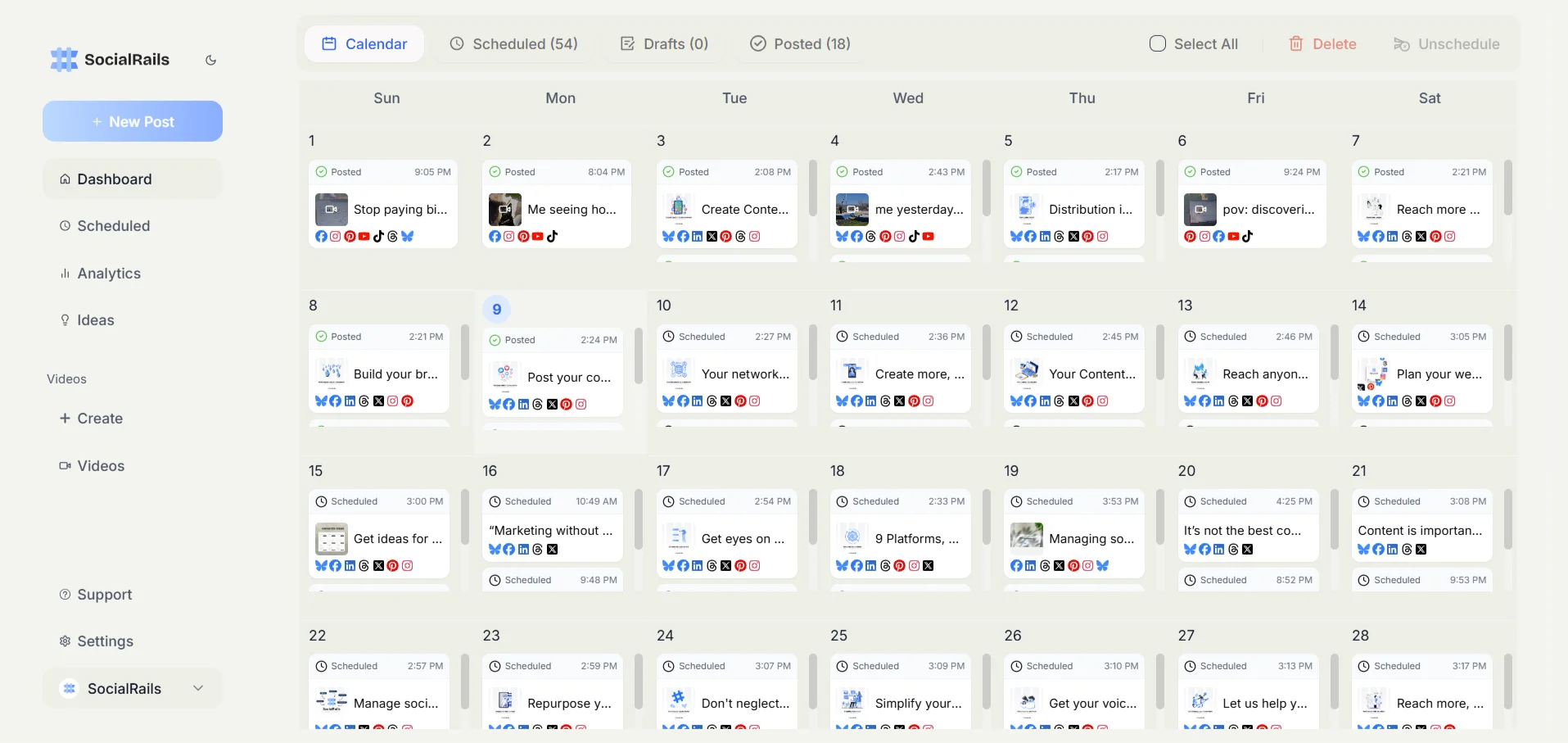
Related tools and guides: Get your personalized LinkedIn Growth Strategy Generator, learn how to schedule LinkedIn posts, or find the best LinkedIn scheduler tools. If creating enough content is the bottleneck, Lyter can auto-generate a month of posts, Scripe converts voice memos into polished LinkedIn posts, and Socialsonic flags trending topics so you always know what to post about.
LinkedIn Posting Frequency by Account Type
Personal Profiles
Individual professionals (3-5 posts per week):
- This is the range where most professionals see consistent growth without burning out on content creation
- Posting daily can work but isn't necessary — you won't be penalized for skipping a day
- The minimum to stay visible in feeds is about 1 post per week, but growth will be slow at that pace
- Focus on sharing genuine professional insights rather than posting for the sake of frequency
Thought leaders and active creators (5-7 posts per week):
- If LinkedIn is a primary channel for your business or personal brand, daily posting makes sense
- Mix content formats: text posts, carousels, videos, polls
- Engage with comments on your posts and on others' posts daily — this matters as much as posting
- LinkedIn's algorithm rewards consistent creators who also participate in discussions
Job seekers (3-4 posts per week):
- Share industry insights and professional perspectives to demonstrate expertise
- Engage with content from companies and people you'd want to work with
- Balance self-promotion with valuable content
- Comment thoughtfully on others' posts daily to increase visibility
Company Pages
Business pages (1 post per business day):
- Company pages typically have lower organic reach than personal profiles on LinkedIn
- 1 post per business day (5/week) is the sweet spot for most companies
- Posting more than once per day can actually decrease engagement per post
- Space out promotional and educational content
- Consider creating a LinkedIn Showcase Page for specific product lines or audiences
Small business pages (3-4 posts per week):
- Quality matters more than frequency, especially with limited resources
- Share behind-the-scenes content, customer stories, and team highlights
- Engage with comments and community content on non-posting days
- Even 2-3 posts per week can maintain a strong presence if the content is consistently good
What to Post Each Day (Sample Weekly Schedule)
Weekend posting: Optional. LinkedIn engagement drops on weekends for most industries. Use weekends to engage with others' content instead of publishing your own.
Content Mix
A balanced LinkedIn content strategy looks roughly like this:
- 40% Educational — Tips, tutorials, frameworks, industry insights
- 30% Industry commentary — Trends, news reactions, thought leadership
- 20% Personal/company stories — Behind-the-scenes, lessons learned, culture
- 10% Promotional — Products, services, events, job openings
Promotional content should be the smallest portion. LinkedIn's audience responds best to content that teaches, inspires, or starts a conversation — not content that sells.
Best Times to Post on LinkedIn
General Peak Times
Important context:
- These times are in your audience's timezone, not yours
- Monday mornings tend to have lower engagement (people catching up on email)
- Friday afternoons see a drop as people mentally shift to the weekend
- B2B audiences are most active during business hours; B2C can vary
How to Find Your Best Posting Time
- Check LinkedIn Analytics — Go to your profile or company page analytics to see when your audience is online
- Test different times over 3-4 weeks — try morning, midday, and afternoon
- Track engagement rates for each time slot (not just likes — look at comments and shares)
- Stick with what works once you find your optimal window
- Use our Best Posting Time Calculator for personalized recommendations
Quality Over Quantity: What Makes a Good LinkedIn Post
Posting often won't help if the content doesn't resonate. Here's what actually drives engagement:
What Works on LinkedIn
- Personal stories with professional lessons — "Here's what happened and what I learned"
- Contrarian or thought-provoking opinions — "Most people think X, but here's why I disagree"
- Actionable advice — Specific tips people can implement today
- Vulnerable honesty — Admitting mistakes, sharing failures alongside wins
- Document carousels — Multi-slide educational content performs well algorithmically (see LinkedIn carousel sizes for exact specs)
What Doesn't Work
- Generic motivational quotes with no personal context
- Purely promotional posts ("Buy our product!")
- Sharing links with no commentary (LinkedIn deprioritizes outbound links)
- Posting the same format every time
- Engagement bait ("Like if you agree! Comment YES!")
Formatting Tips
- Use line breaks — dense paragraphs don't perform well on LinkedIn
- Start with a strong opening line (the "hook" before "see more")
- Keep posts scannable with short paragraphs
- Use 3-5 hashtags maximum (more looks spammy)
- Tag relevant people only when it genuinely adds to the conversation
Signs You're Posting Too Much (or Too Little)
Over-Posting Indicators
- Engagement per post is declining even though impressions are stable
- You're posting generic content just to maintain frequency
- Fewer comments and meaningful interactions
- You notice unfollows or reduced connection requests
Under-Posting Indicators
- Followers forget you exist — minimal profile views
- You're consistently outpaced by competitors in your space
- Networking opportunities dry up
- You feel invisible in your industry's LinkedIn conversation
The Right Balance
The goal isn't a specific number — it's finding the frequency where you can consistently publish quality content without sacrificing your time or the substance of your posts. For most professionals, that's 3-5 posts per week.
Common LinkedIn Posting Mistakes
Posting without engaging. LinkedIn rewards people who participate in conversations, not just broadcast. Spend 10-15 minutes per day commenting on others' posts.
Only sharing company content. Personal profiles perform better with a mix of personal insights and company updates. Don't use your personal profile as a company news feed.
Ignoring analytics. LinkedIn provides free analytics for both personal and company pages. Check them monthly to understand what content resonates.
Inconsistent posting. Posting 5 times one week and then disappearing for two weeks is worse than posting twice per week consistently. The algorithm favors consistent creators.
External links in every post. LinkedIn's algorithm deprioritizes posts with outbound links. If you need to share a link, put it in the first comment instead of the post body, or use document carousels to keep people on-platform.
Measuring Your LinkedIn Posting Success
Key Metrics to Track
Where to Check Analytics
- Personal profiles: Your profile → Analytics section
- Company pages: Company page admin → Analytics tab
- Third-party tools: Scheduling platforms like SocialRails provide cross-platform analytics
Need ideas for what to post? Check our LinkedIn content ideas for business guide with 50+ proven formats. If writing takes too long, AI tools like Typegrow (free plan available) or EasyGen can generate LinkedIn-ready posts from trending topics.
LinkedIn Resources
LinkedIn Strategy:
- Best Time to Post on LinkedIn
- How to Boost LinkedIn Posts
- LinkedIn Company Page Management
- LinkedIn Video Format Specs
- Best LinkedIn Hashtags
Professional Networking:
Free LinkedIn Tools:
- LinkedIn Post Generator
- LinkedIn Bio Generator
- Best Posting Time Calculator
- LinkedIn SSI Checker
Was this article helpful?
Let us know what you think!