

How to Build a Marketing Campaign Concept (With 12 Examples)

A campaign concept is the central creative idea that ties all your marketing activities together. Without one, your campaigns feel scattered. With a strong one, every ad, post, and email pulls in the same direction.
What is a Campaign Concept?
A campaign concept is the unifying creative idea behind a marketing campaign. It answers: "What's the one message we want people to remember?" Think of Nike's "Just Do It" or Apple's "Think Different", those are campaign concepts that guided every piece of creative.
Create content, post everywhere
Create captions, images, and videos with AI. Schedule to 9 platforms in seconds.
Start your free trial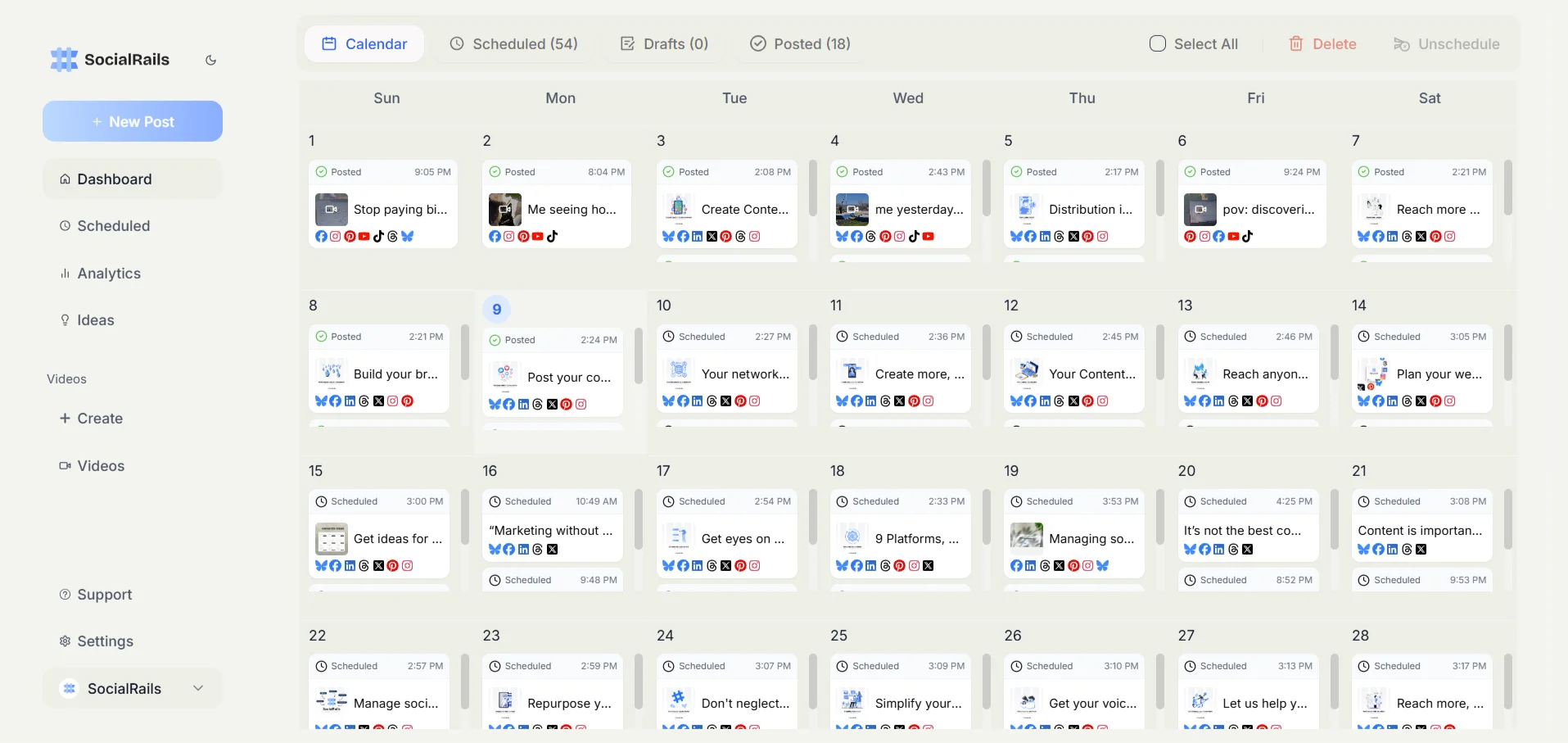
5-Step Framework to Build a Campaign Concept
Step 1: Define the Objective
What should this campaign achieve? One primary objective, not five. If your campaign is content-driven, our content marketing goals guide can help you define measurable objectives for content campaigns specifically.
Step 2: Identify Your Audience
Who specifically are you talking to? The more specific, the stronger the concept.
- Demographics: Age, location, income, job title
- Psychographics: Values, interests, pain points, aspirations
- Behavior: What they do online, where they spend time, how they buy
- Trigger: What moment makes them need your solution?
Example: "Marketing managers at B2B companies (50-500 employees) who are overwhelmed by posting to 5+ social media platforms manually."
Step 3: Craft the Core Message
Distill everything into one sentence. This is the heart of your concept.
Formula: [Audience] can [desired outcome] by [your solution/approach], because [proof/reason].
Examples:
- "Small businesses can look like big brands on social media by using smart scheduling tools."
- "Parents can give the gift of creativity this holiday season with our art kits."
- "Freelancers can stop worrying about inconsistent income with our client matching platform."
Step 4: Choose Your Channels
Where will this campaign live? Pick channels based on where your audience actually is.
Step 5: Create the Creative Brief
Document everything in a one-page brief. If your campaign involves a PR component, you'll also want strong spokesperson quotes -- see our press release quote examples for templates you can adapt.
What's the most important test for a campaign concept?
12 Campaign Concept Examples
1. Product Launch: "The [Category] That [Unexpected Benefit]"
Concept: Position your new product by highlighting a benefit competitors don't talk about. Example: "The project management tool that actually reduces meetings", focuses on a pain point (too many meetings) rather than features. Channels: Social ads, email, landing page, PR
2. Seasonal: "Make This [Season] Your [Adjective]-est Yet"
Concept: Tie your product to a seasonal aspiration. Example: "Make This Winter Your Coziest Yet", a home goods brand featuring winter essentials. Channels: Instagram, email, in-store displays
3. User-Generated Content: "Show Us Your [Product/Result]"
Concept: Let customers create your campaign content. Need inspiration? Check out the best UGC campaigns that turned customer content into viral marketing. Example: "Show Us Your Morning Routine", a coffee brand encouraging customers to share morning content featuring their product. Channels: Instagram, TikTok, YouTube Shorts
4. Challenge: "The [Number]-Day [Transformation]"
Concept: Create a time-bound challenge that demonstrates your product's value. Example: "The 14-Day Content Sprint", a scheduling tool challenging users to post daily for 2 weeks using their platform. Channels: Email, social media, community
5. Comparison: "[Old Way] vs [New Way]"
Concept: Contrast the painful old approach with your modern solution. Example: "Spreadsheets vs Smart Scheduling", showing the chaos of manual social media management vs. a scheduling tool. Channels: Paid social, blog content, video ads
6. Social Cause: "[Company] x [Cause]"
Concept: Align your brand with a cause your audience cares about. Example: "One Post, One Tree", for every social media post scheduled through the platform, plant a tree. Channels: All channels, PR, partnerships
What should the value-to-product ratio be in a campaign concept?
7. Behind-the-Scenes: "How We [Process/Made/Built It]"
Concept: Pull back the curtain on your process to build trust and interest. Example: "How We Built [Feature] in 30 Days", a SaaS company documenting their development process. Channels: LinkedIn, blog, YouTube, email
8. Customer Story: "Meet [Customer Name]"
Concept: Let real customer transformations sell for you. Example: "Meet [Customer]: From 200 to 20,000 Followers", a social media tool featuring real customer growth stories. Channels: Video, social media, case study page
9. Limited Edition: "Only [Number] Available"
Concept: Create scarcity around a special version of your product. Example: "Only 500 Founder's Edition Packages", limited quantity at a premium price with exclusive benefits. Channels: Email, social, landing page
10. Education: "The [Topic] Masterclass"
Concept: Position your brand as the educator in your space. Example: "The Social Media Masterclass", a free video series teaching social media strategy with product integration. Channels: YouTube, email course, social clips
11. Rebranding: "Same [Core Value], New [External Change]"
Concept: Use a rebrand as a campaign moment rather than a quiet change. Example: "Same commitment to your growth, now with a fresh look", turning a visual update into a campaign. Channels: Email announcement, social, PR, in-product
12. Community: "Built by [Community/Users]"
Concept: Highlight that your product is shaped by customer feedback. Example: "You asked, we built it", launching features specifically requested by users. Channels: Product updates, email, social, community forums
Campaign Concept Template
Use this for your next campaign:
CAMPAIGN CONCEPT BRIEF

Campaign Name: ________________________________
Objective: ________________________________
Target Audience: ________________________________
Core Message (1 sentence): ________________________________
Tagline: ________________________________
Channels: ________________________________
Timeline: ________ to ________
Budget: $________
Primary KPI: ________________________________
Secondary KPI: ________________________________
Creative Direction: ________________________________
Common Concept Mistakes
Too broad: "We make great products" isn't a concept. "We make the 15-minute morning routine possible" is.
Too many messages: If you can't explain the concept in one sentence, it's too complicated.
Copying competitors: If your concept could be used by any competitor with a name swap, it's not differentiated enough.
Ignoring the audience: A clever concept that doesn't resonate with your specific audience is worthless.
No emotional hook: The best concepts make people feel something, whether that's excitement, curiosity, belonging, or relief.
Can you run multiple campaign concepts at the same time?
FAQ
How is a campaign concept different from a tagline? The concept is the strategic idea. The tagline is the short phrase that expresses it. Example: Concept = "Everyday athletes deserve the same gear as pros." Tagline = "Just Do It."
How long should a campaign concept last? Individual campaigns: 4-12 weeks. Brand-level concepts (like "Just Do It") can last decades. Seasonal campaigns are typically 3-6 weeks.
Can I run multiple campaign concepts at once? Not within the same audience. Running competing messages confuses people. You can run different concepts for different audience segments.
Do I need an agency to create a campaign concept? No. Small businesses create effective campaign concepts every day. The framework above works for any budget. Agencies add value for large-scale, multi-channel campaigns.
How do I know if my concept is working? Track your primary KPI from the creative brief. If awareness was the goal, measure reach and recall. If conversion, measure signups or sales. Check results at the 25%, 50%, and 75% marks of the campaign timeline.
Related Resources
Was this article helpful?
Let us know what you think!