

Public Relations Plan Template: Build a PR Strategy That Gets Media Coverage

Most PR plans collect dust in a Google Doc somewhere.
The reason? They're either too vague ("increase brand awareness") or too complicated (50-page strategy documents nobody reads).
A good PR plan fits on 2-3 pages, gives your team clear direction, and produces measurable media coverage. Here's the template.
Create content, post everywhere
Create captions, images, and videos with AI. Schedule to 9 platforms in seconds.
Start your free trial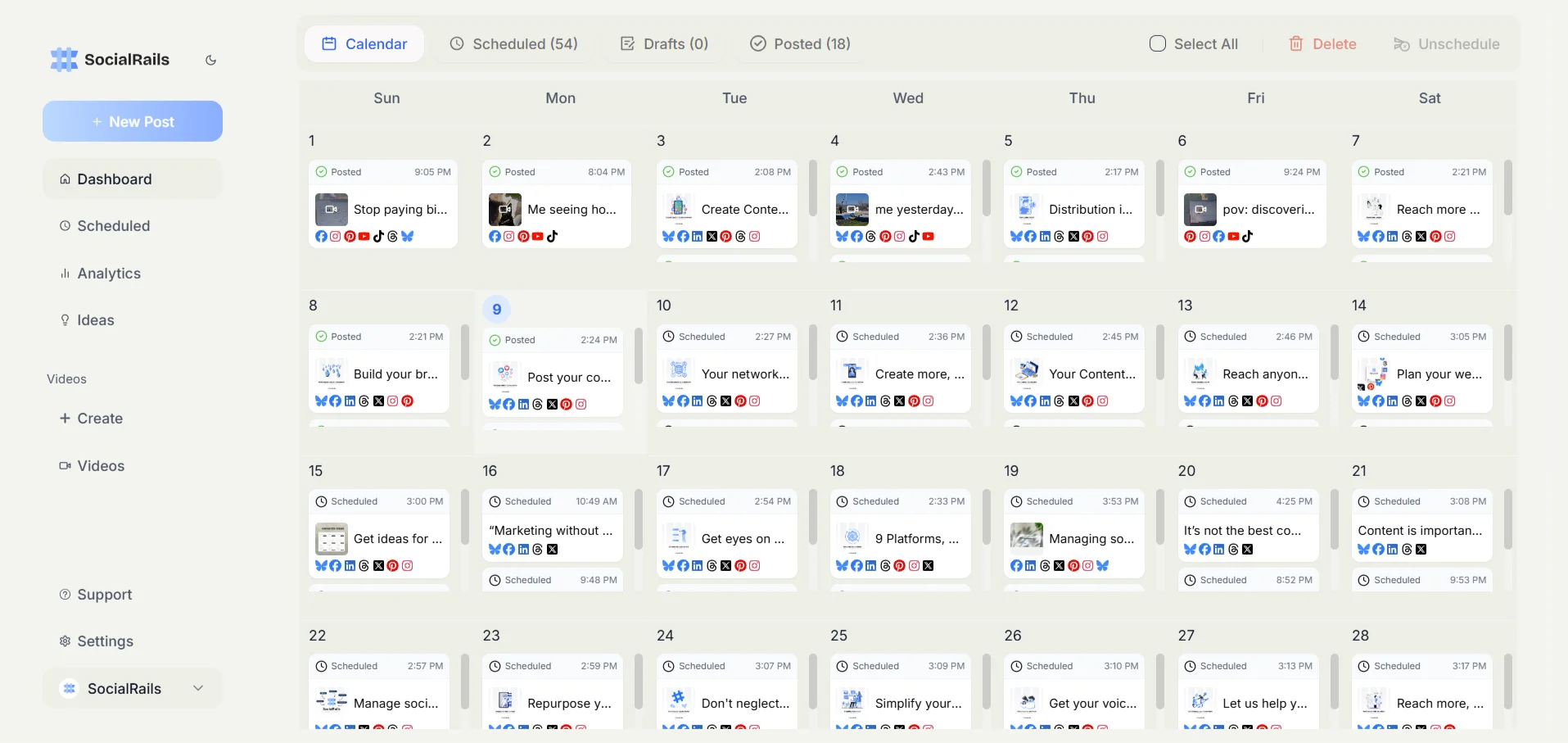
What a Public Relations Plan Actually Is
A PR plan is your roadmap for earning media coverage, managing your brand reputation, and communicating with your target audiences.
It answers four questions:
- What do we want people to think about our brand?
- Who needs to hear our message?
- How will we reach them?
- How do we measure success?
That's it. Everything else is execution detail.
What should a good PR plan prioritize?
💡 Tip: Think carefully before selecting your answer!
The PR Plan Template (Copy This)
Section 1: Executive Summary
Write 2-3 sentences covering:
- Who you are
- What you're trying to achieve
- When this plan covers (typically 6-12 months)
Example:
"Acme SaaS will establish thought leadership in the project management space and secure coverage in 15+ industry publications by Q4 2026. This plan focuses on product launches, founder positioning, and data-driven storytelling."
Section 2: Situation Analysis
Current state:
- How is your brand currently perceived?
- What media coverage have you earned in the past 12 months?
- What are your competitors doing in PR?
SWOT for PR:
Section 3: PR Goals
Set 3-5 specific goals. Use this format:
Section 4: Target Audiences
Primary audiences:
- Industry journalists covering your niche
- Trade publication editors
- Podcast hosts in your category
- Industry analysts and influencers
Secondary audiences:
- Customers and prospects (who see the coverage)
- Investors and partners
- Employees (internal PR)
For each audience, define: Who they are, what they care about, and where they consume media. This connects to your overall target demographic strategy.
Section 5: Key Messages
Create 3 core messages. Each should be:
- One sentence that anyone can understand
- Backed by proof (data, case studies, quotes)
- Differentiated from what competitors say
Message framework:
Section 6: PR Tactics and Activities
Ongoing tactics:
- Media outreach: Personalized pitches to target journalists (not mass distribution). See our guide on press release distribution
- Thought leadership: Bylined articles, expert commentary, data reports
- Press releases: For newsworthy announcements only. Use our press release outline template
- Social media PR: Amplify coverage through social media strategy
Campaign-based tactics:
How many journalists should be on your targeted media list?
💡 Tip: Think carefully before selecting your answer!
Section 7: Media List
Build a targeted list of 50-100 journalists (not 10,000):
Where to find journalists:
- Read publications in your niche daily
- Use Twitter/X to find active reporters
- Check recent bylines on competitor coverage
- Attend industry events
Section 8: Timeline and Calendar
Map your PR activities to a calendar:
Monthly rhythm:
- Week 1: Pitch development and media list updates
- Week 2: Outreach and follow-ups
- Week 3: Content creation (bylines, data reports)
- Week 4: Results tracking and relationship building
Use a content calendar to coordinate PR with your broader marketing activities.
Section 9: Budget
Total estimated annual budget: $10,000-50,000 for mid-size companies.
Section 10: Measurement
Track these metrics monthly:
- Media placements: Number of articles mentioning your brand
- Share of voice: Your coverage vs. competitors
- Domain authority impact: Backlinks from media coverage
- Website traffic from PR: Referral traffic from earned media
- Message pull-through: Do articles use your key messages?
- Sentiment: Positive vs. neutral vs. negative coverage
PR Plan Examples by Company Type
Startup PR Plan
Focus: Launch coverage, founder positioning, funding announcements Budget: $5,000-15,000/year Key tactic: Personal relationships with 10-15 beat reporters
B2B SaaS PR Plan
Focus: Thought leadership, product launches, customer case studies Budget: $20,000-50,000/year Key tactic: Original research reports and data storytelling
Local Business PR Plan
Focus: Community events, local media, expert commentary Budget: $2,000-10,000/year Key tactic: Local TV/radio appearances and community partnerships. See more local business promotion ideas
E-commerce PR Plan
Focus: Product reviews, seasonal campaigns, influencer partnerships Budget: $15,000-40,000/year Key tactic: Product seeding to editors and influencer collaborations
What's the most effective PR tactic for startups with a small budget?
💡 Tip: Think carefully before selecting your answer!
Common PR Plan Mistakes
1. Setting vague goals "Increase brand awareness" isn't measurable. "Secure 15 media placements in industry publications by Q3" is.
2. Mass-distributing press releases Stop paying $2,000 to spam 10,000 journalists. Build relationships with 50 relevant reporters instead.
3. Only doing PR around launches The best PR is ongoing. Build relationships and pitch regularly, not just when you need something.
4. No crisis plan Every PR plan needs a crisis management section. Decide who speaks, what channels to use, and response timelines before you need them.
5. Ignoring measurement If you can't prove PR drove results, your budget gets cut first. Track everything.
Tools to Support Your PR Plan
- PR Campaign Ideas Generator, generate campaign concepts for your PR plan
- Press Release Distribution Guide, smart distribution strategies
- PR Caption Generator, social captions for PR content
- Small Business PR Strategies, PR on a budget
Start Building Your PR Plan
Download-worthy PR plans share three traits: they're specific, measurable, and actionable. Use the template above to build yours, focus on relationships over distribution, and track your results monthly.
The brands that win at PR aren't the ones with the biggest budgets. They're the ones with the clearest strategy and the most consistent execution.
Was this article helpful?
Let us know what you think!