

Brand Monitoring: The System That Catches Crisis Before It Costs You Millions

A customer complained on Twitter at 9pm.
By 9am the next day, it had 50,000 retweets, hit the news, and your stock dropped 3%.
You saw it at 10am—too late.
The truth: 84% of reputation crises start as small, ignored online mentions. A complaint, a negative review, a misleading article. Something you could have addressed in minutes—if you'd known about it.
The solution: Brand monitoring. A system that tracks every mention of your brand across the internet in real-time, alerts you instantly, and gives you the data to respond strategically before small issues become existential crises.
This guide shows you exactly how to build a brand monitoring system: what to track, which tools to use (free to enterprise), how to set up alerts, and what to do when you find problems.
Create content, post everywhere
Create captions, images, and videos with AI. Schedule to 9 platforms in seconds.
Start your free trial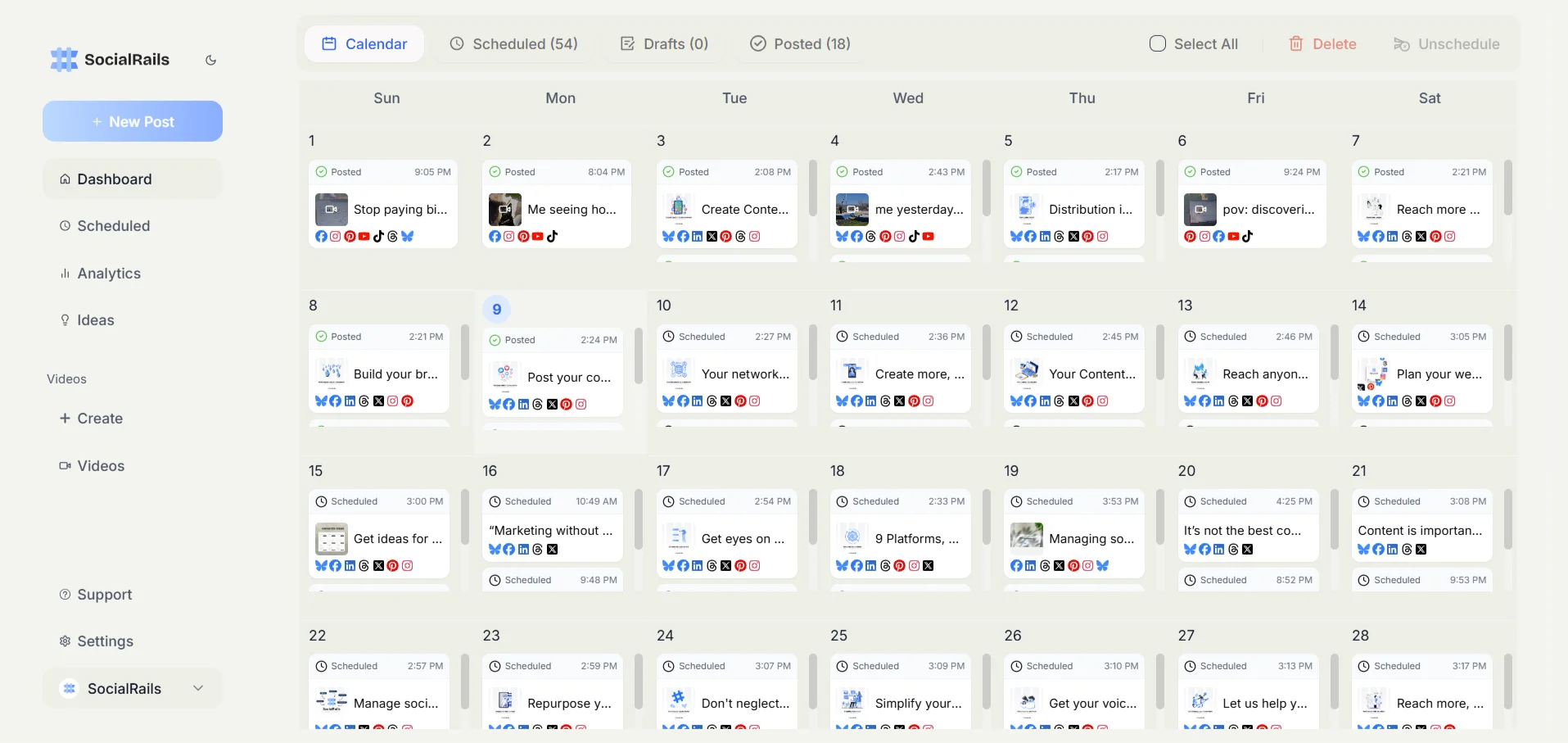
What Is Brand Monitoring (And Why It Matters)
Beyond Vanity Metrics
Brand monitoring is NOT:
- ❌ Checking Instagram likes
- ❌ Counting follower growth
- ❌ Tracking engagement rate
Brand monitoring IS:
- ✅ Tracking every mention of your brand (social, news, blogs, forums, reviews)
- ✅ Measuring sentiment (positive, negative, neutral)
- ✅ Identifying crises before they explode
- ✅ Finding opportunities (influencers, partnerships, customer insights)
- ✅ Monitoring competitors
Related tools: Use social media CRM software to turn mentions into leads, and social media archiving software for compliance and record keeping.
The Business Impact
📊 Brand Monitoring ROI
84%
Of crises start as ignored online mentions
$1.4M
Average cost of a preventable brand crisis
2 hours
Average response time needed to prevent escalation
67%
Of consumers expect brands to respond within 24hrs
Real examples:
United Airlines (2017):
- Passenger dragged off plane → video went viral
- Company didn't monitor Twitter in real-time
- Response came 20 hours later
- Cost: $1.4 billion in market cap, global PR disaster
With monitoring: Alert within minutes, immediate response, contained crisis
Small business example:
- Negative Google review posted Friday 6pm
- Owner saw it Monday 10am (too late)
- Review had been seen 500+ times, shared on Facebook
- Lost 3 potential customers over weekend
With monitoring: Alert Friday 6:05pm, responded by 6:30pm, issue resolved
What to Monitor
1. Brand Name Mentions
Track:
- Your company/brand name
- Common misspellings
- Abbreviations
- Acronyms
- Previous brand names (if rebranded)
Where:
- Social media (Twitter, Facebook, Instagram, TikTok, LinkedIn, Reddit)
- News sites and blogs
- Forums (Reddit, Quora, industry forums)
- Review sites (Google, Yelp, Trustpilot, G2, Capterra)
- Videos (YouTube, TikTok)
- Podcasts
Example keywords:
- "Nike"
- "Nkie" (common typo)
- "Just Do It" (slogan)
- "@Nike" (social handle)
2. Product & Service Names
Track:
- Product names
- Service names
- SKUs (for specific products)
- Features
Why it matters:
- Specific product issues (defects, complaints)
- Feature requests
- Comparison to competitors
- Usage tips (content opportunities)
Example:
- "AirPods Pro"
- "AirPods Pro 2"
- "Noise cancellation issues" + AirPods
- "AirPods vs [competitor]"
3. Executives & Key People
Track:
- CEO name
- Founder names
- Executives
- Spokesperson
- Brand ambassadors
Why it matters:
- Executive reputation = brand reputation
- Crisis prevention (controversial statements)
- Thought leadership opportunities
- Speaking opportunities
Example:
- "Elon Musk" (mentions impact Tesla)
- "Elon" + "Tesla" (combined monitoring)
4. Competitors
Track:
- Competitor brand names
- Their products
- "Your brand vs [competitor]"
- "[Competitor] alternative"
Why it matters:
- Competitive intelligence
- Market positioning
- Identify switching reasons
- Find unhappy competitor customers
Example:
- "Switching from Salesforce to HubSpot"
- "Salesforce alternative"
- "Why I left Salesforce"
5. Industry Keywords
Track:
- Industry terms
- Problem statements
- Solution keywords
- Trending topics
Why it matters:
- Join relevant conversations
- Identify sales opportunities
- Content ideas
- Thought leadership
Example (for CRM company):
- "CRM software"
- "Need a CRM recommendation"
- "Customer relationship management"
- "Sales pipeline tool"
6. Campaign & Hashtag Tracking
Track:
- Campaign hashtags
- Event hashtags
- Branded hashtags
- UGC hashtags
Why it matters:
- Campaign performance
- UGC discovery
- Event engagement
- Community building
Example:
- #ShareACoke (Coca-Cola campaign)
- #NikeWomen
- Company event hashtags
How to Set Up Brand Monitoring
Step 1: Choose Your Tools (see recommendations below)
Free option:
- Google Alerts (limited but free)
- Social platform native search
- Manual checking
Budget option ($20-200/month):
- Swello (€19/mo, monitoring included) - European option
- Brand24 ($79/mo)
- Mention ($49/mo)
- Awario ($29/mo)
Professional ($300-1,000/month):
- Sprout Social ($249/mo)
- Hootsuite
- Brandwatch
Enterprise (custom pricing):
- Meltwater
- Brandwatch Enterprise
- Sprinklr
Step 2: Configure Keywords
Brand keywords:
"Your Brand Name"
"Your Brand" + typos
@yourbrand (social handles)
yourbrand.com (URLs)
Product keywords:
"Product Name"
"Product Name" + review
"Product Name" + problem
"Product Name" vs competitor
Competitor keywords:
"Competitor Name"
"Alternative to [Competitor]"
"[Competitor] vs [Your Brand]"
Boolean search examples:
"Your Brand" AND (problem OR issue OR complaint)
"Your Brand" OR "@yourbrand" OR "yourbrand.com"
"Your Brand" NOT jobs (exclude job postings)
Step 3: Set Alert Rules
Immediate alerts (email/SMS/Slack):
- Brand name + negative sentiment
- Crisis keywords (e.g., "recall", "lawsuit", "scam")
- High-reach mentions (influencer, major outlet)
- Competitor crisis (opportunity)
Hourly alerts:
- Medium-reach mentions
- Customer questions
- Product feedback
Daily digest:
- Low-priority mentions
- Industry trends
- Competitor updates
Example alert setup:
CRITICAL (immediate SMS + Slack):
- Brand name + ("lawsuit" OR "recall" OR "scam" OR "fraud")
- Mention from account with 100K+ followers
- Sentiment: Negative + reach > 10K
HIGH (email within 15 min):
- Brand name + ("complaint" OR "problem" OR "issue")
- Customer service mentions
- Product defect mentions
MEDIUM (hourly email):
- General brand mentions
- Product questions
- Positive reviews
LOW (daily digest):
- Industry keywords
- Competitor mentions (non-critical)
- Broader trend tracking
Step 4: Create Response Protocols
Crisis response (within 2 hours):
- Assess severity (who saw it? sentiment? validity?)
- Notify key stakeholders (PR, legal, exec team)
- Craft response (or decide not to respond)
- Monitor escalation
Customer complaint response (within 4 hours):
- Acknowledge publicly
- Move to DM/email for resolution
- Follow up publicly when resolved
- Log issue for product team
Question/inquiry response (within 24 hours):
- Provide helpful answer
- Link to resources
- Offer additional help
Positive mention response (within 48 hours):
- Thank them
- Share (with permission)
- Build relationship
Brand Monitoring Tools Comparison
Free Tools
1. Google Alerts
What it does: Email alerts for web mentions
Coverage: News, blogs, web pages (NO social media)
Pros:
- ✅ Free
- ✅ Easy setup
- ✅ Basic monitoring
Cons:
- ❌ Misses 60-70% of mentions
- ❌ No social media
- ❌ Delayed alerts (sometimes days)
- ❌ No sentiment analysis
Best for: Very basic monitoring, tight budgets
2. Social Platform Native Tools
What it does: Platform-specific mention tracking
Coverage:
- Twitter: Mentions, hashtags (free)
- Instagram: Mentions, tags (free in app)
- Facebook: Page mentions (free)
- LinkedIn: Mentions (free)
Pros:
- ✅ Free
- ✅ Real-time (on platform)
- ✅ Accurate (first-party data)
Cons:
- ❌ Manual checking required
- ❌ No cross-platform view
- ❌ No alerts (must check regularly)
- ❌ No analytics
Best for: Startups monitoring 1-2 platforms
Budget Tools ($50-200/month)
3. Brand24
Pricing: $79-399/month
Coverage: Social, news, blogs, forums, podcasts, video
Best for: SMBs, agencies, solid all-around tool
Key features:
- Real-time monitoring
- Sentiment analysis (AI-powered)
- Influencer scoring
- Mention analytics
- Alerts (email, Slack)
Full review in Media Monitoring Tools guide
4. Mention
Pricing: $41-599/month
Coverage: 1B+ sources, social, news, blogs, forums
Best for: SMBs, startups, agencies
Key features:
- Real-time alerts
- Sentiment tracking
- Competitor monitoring
- Boolean search
- Team collaboration
Looking for options? See Mention alternatives or our Mention vs Brand24 comparison.
5. Awario
Pricing: $29-299/month
Coverage: Social, news, blogs, forums, Reddit
Best for: Lead generation + monitoring
Key features:
- Affordable pricing
- Boolean search (all plans)
- Lead generation focus
- Competitor analysis
- Influencer identification
Full review in Media Monitoring Tools guide
Professional Tools ($300-1,000/month)
6. Sprout Social
Pricing: $249-499/month (listening in Advanced plan)
Coverage: Social platforms, limited news/blogs
Best for: Businesses wanting management + monitoring
Key features:
- Social listening
- Publishing + scheduling
- Team collaboration
- Custom reports
- Competitor analysis
Full review in Media Monitoring Tools guide. Looking for lower-cost options? See our Sprout Social alternatives comparison, Sprout Social review, or compare Hootsuite vs Sprout Social.
7. Hootsuite (with Insights)
Pricing: $739+/month (with listening add-on)
Coverage: Social, news, blogs (powered by Brandwatch)
Best for: Existing Hootsuite users
Key features:
- Integrated platform
- Brandwatch technology
- Social listening dashboards
- Trend identification
Enterprise Tools (Custom Pricing)
8. Meltwater
Pricing: Custom ($15K-50K+/year)
Coverage: 270K+ sources, broadcast, print, social
Best for: Large enterprises, PR agencies
Key features:
- Most comprehensive coverage
- Advanced analytics
- Broadcast monitoring (TV, radio)
- API access
- Crisis detection
Full Meltwater review | Meltwater alternatives
9. Brandwatch
Pricing: Custom ($10K-35K+/year)
Coverage: 100M+ sources, deep social analytics
Best for: Mid-to-large enterprises
Key features:
- AI-powered insights
- Predictive analytics
- Image recognition
- Trend prediction
- Crisis severity scoring
Full review in Media Monitoring Tools guide. See also our comparisons: Brandwatch vs Hootsuite and Brandwatch vs Sprout Social. For detailed costs, check our Brandwatch pricing breakdown or explore Brandwatch alternatives for budget-friendly options.
Quick Tool Recommendation
Budget: $0/month , Google Alerts + manual social checking , Covers: Basic web mentions , Miss: Social media, real-time alerts
Budget: $50-100/month , Awario ($29) or Mention ($49) or Brand24 ($79) , Covers: Social + web + news + blogs , Best value for SMBs
Budget: $200-500/month , Sprout Social ($249-499) or Agorapulse ($159-239) , Covers: Social management + listening , All-in-one solution
Budget: $1,000+/month , Meltwater or Brandwatch , Covers: Everything + broadcast + advanced AI , Enterprise-grade
Brand Monitoring Best Practices
1. Monitor 24/7 (Not 9-5)
Why:
- Crises don't happen on business hours
- Customers complain on weekends
- Global audience (different time zones)
How:
- Set up mobile alerts (SMS, push)
- Rotate on-call team (24/7 coverage)
- Partner with monitoring service (some offer 24/7 alerts)
Example protocol:
- 9am-5pm: Marketing team monitors
- 5pm-9am: On-call rotation (1 person per day)
- Weekends: On-call person checks 3x/day minimum
2. Distinguish Signal from Noise
Noise (ignore or low priority):
- Job postings mentioning your brand
- Spam/bot mentions
- Irrelevant context (different company, same name)
- Low-reach, no engagement
Signal (pay attention):
- Customer complaints (any reach)
- High-reach mentions (influencers, media)
- Negative sentiment with engagement
- Recurring themes (multiple people saying same thing)
How to filter:
- Use negative keywords (e.g., exclude "jobs", "hiring")
- Set reach thresholds (only alert if 1K+ followers)
- Review filters weekly (refine based on noise)
3. Respond Strategically (Not to Everything)
When to respond:
- ✅ Customer complaints (always)
- ✅ Misinformation (factual corrections)
- ✅ Crisis situations (mandatory)
- ✅ Positive high-reach mentions (thank them)
- ❌ Trolls (don't feed them)
- ❌ Competitor trash talk (ignore unless severe)
- ❌ Minor negative comments (not everything needs response)
Response decision tree:
- Is it factually wrong? , Correct it
- Is it a legitimate complaint? , Resolve it
- Is it a troll? , Ignore
- Is it positive/neutral? , Engage if high-value
4. Track Sentiment Trends (Not Individual Mentions)
What to track:
- Overall sentiment score (aim for +30 to +50)
- Sentiment trend (is it improving or declining?)
- Sentiment by topic (product, service, support)
- Sentiment vs. competitors
Example analysis:
Month 1: +35 sentiment (good) Month 2: +28 sentiment (declining, investigate) Root cause: Product update caused complaints Action: Roll back feature, communicate fix timeline Month 3: +40 sentiment (recovered)
Set up alerts:
- Sentiment drops 10+ points in 24 hours → Crisis alert
- Sentiment drops 5 points over 7 days → Investigate
- Sentiment improves 10+ points → Share win with team
5. Build a Knowledge Base
Create response templates:
Customer complaint:
"Hi [Name], we're sorry to hear about your experience.
We'd like to make this right. Please DM us your order
number and we'll resolve this ASAP. - [Your Name]"
Misinformation:
"Thanks for sharing. Just to clarify: [factual correction].
Happy to provide more details if helpful. - [Your Name]"
Positive mention:
"Thank you so much! We're glad [product/service]
is working well for you. 🙏 - [Your Name]"
FAQ database:
- Common questions + approved answers
- Product info
- Company policies
- Crisis talking points (pre-approved by legal/PR)
Crisis Detection & Response
Early Warning Signs
Monitor for these crisis indicators:
1. Mention volume spike:
- 3x normal volume in 1 hour = investigate
- 10x normal volume = crisis mode
2. Sentiment cliff:
- 20+ point drop in 24 hours = crisis
- 10-20 point drop = investigate
3. High-reach negative mention:
- Influencer (100K+) shares negative content
- Media outlet publishes critical article
- Viral post (10K+ engagement)
4. Recurring negative theme:
- Multiple customers reporting same issue
- Pattern of complaints (e.g., "product breaks after 2 months")
Crisis Response Protocol
Within 15 minutes:
-
Assess severity:
- Who saw it? (reach)
- Is it spreading? (shares, retweets)
- Is it factual? (truth vs. misinformation)
-
Notify key people:
- PR lead
- Legal (if necessary)
- Exec team (CEO, CMO)
- Customer support (if customer-facing)
Within 1 hour: 3. Decide response strategy:
- Acknowledge immediately?
- Investigate first?
- Legal review needed?
- No response (if not factual/troll)?
- Craft response:
- Be empathetic
- Be transparent
- Take responsibility (if appropriate)
- Explain what you're doing to fix it
Within 2 hours: 5. Respond publicly (if decided)
- Monitor escalation:
- Is it spreading or contained?
- Additional responses needed?
Within 24 hours: 7. Follow up:
- Update on resolution
- Thank those who helped
- Internal debrief (what went wrong? how to prevent?)
Crisis Response Examples
Good crisis response (Airbnb, 2020):
- Crisis: COVID-19 → mass cancellations → hosts angry
- Response time: 24 hours
- Action: CEO published letter, $250M host fund, policy changes
- Result: Sentiment recovered, prevented long-term damage
Bad crisis response (United Airlines, 2017):
- Crisis: Passenger dragged off plane, video viral
- Response time: 20 hours
- Action: Defensive, blamed passenger initially
- Result: $1.4B market cap loss, global PR disaster
Lesson: Fast, empathetic response = crisis containment. Slow, defensive = disaster.
Your brand monitoring tool alerts you at 9:15 AM that mentions spiked 10x in the last hour with negative sentiment. A customer video showing a product defect is going viral on Twitter (5,000 retweets already). What should you do FIRST?
💡 Tip: Think carefully before selecting your answer!
Create content, post everywhere
Create captions, images, and videos with AI. Schedule to 9 platforms in seconds.
Start your free trialCompetitor Monitoring Strategy
What to Track
1. Competitor mentions:
- Brand name
- Product names
- Campaigns
- Executives
2. Comparative mentions:
- "Your brand vs [competitor]"
- "[Competitor] alternative"
- "Switching from [competitor]"
3. Competitor sentiment:
- Overall sentiment
- Complaint themes
- What customers love/hate
Competitive Intelligence Goldmine
Find opportunities:
Unhappy competitor customers:
- Monitor: "hate [competitor]", "switching from [competitor]"
- Action: Reach out with your solution
Competitor product gaps:
- Monitor: "[Competitor] doesn't have [feature]"
- Action: Highlight your strength, build missing features
Competitor crises:
- Monitor: Competitor brand + negative sentiment spike
- Action: Position yourself as alternative (tactfully)
Example:
Monitored: "Salesforce pricing is too high" Action (by HubSpot): Share blog post "Affordable Salesforce Alternatives"
You're monitoring your competitor's brand mentions. You notice their sentiment dropping from +35 to +10 over the past week due to a price increase announcement. What's the BEST strategic move?
💡 Tip: Think carefully before selecting your answer!
Measuring Brand Monitoring Success
Metrics to Track
1. Response time:
- Average time to respond to mentions
- Goal: Under 2 hours for customer issues
2. Sentiment score:
- (Positive - Negative) / Total × 100
- Goal: +30 to +50 (positive scale)
3. Share of voice:
- Your mentions / (Your + Competitor mentions) × 100
- Goal: 40%+ in your category
4. Crisis prevention:
5. Opportunity identification:
ROI Calculation
Cost:
- Tool: Brand24 ($79/mo × 12) = $948/year
- Time: 1 hour/day × 250 days × $50/hour = $12,500/year
- Total: $13,448/year
Value:
- 1 prevented crisis (avg cost: $1.4M) = $1,400,000
- 10 sales leads found → 2 customers × $10K LTV = $20,000
- 5 influencer partnerships → 500K reach = $15,000 (equiv. ad value)
- Total value: $1,435,000
ROI: 10,576%
Even preventing ONE small crisis justifies the investment.
You're deciding between Google Alerts (free) and Brand24 ($79/mo). Your startup has limited budget. Google Alerts covers 'basic web mentions' but misses 60-70% of mentions and has no social media tracking. What should you choose?
💡 Tip: Think carefully before selecting your answer!
Brand Monitoring Checklist
Daily (30 min):
- Review overnight mentions
- Check sentiment trends
- Respond to customer issues
- Monitor competitor activity
Weekly (1 hour):
- Sentiment analysis (is it improving/declining?)
- Share of voice vs. competitors
- Identify top influencers mentioning you
- Review and refine keyword filters
Monthly (2 hours):
- Generate reports (sentiment, SOV, top mentions)
- Share insights with team
- Identify content opportunities
- Optimize monitoring keywords
Quarterly (4 hours):
- Deep competitor analysis
- Tool evaluation (is current tool working?)
- Crisis response protocol review
- ROI calculation
Related Resources
Tool Pricing & Comparisons:
- 15 Social Media Tools Compared - Complete comparison guide
- Sprout Social Pricing - Enterprise monitoring costs
- Hootsuite Pricing - Monitoring plans explained
- Loomly Pricing - Affordable scheduling option
Brand24 Deep Dives:
- Brand24 Review - Affordable monitoring tool reviewed
- Brand24 Pricing - Plans starting at $79/mo
- Cheaper Than Brand24 - Save on social listening
- Brand24 vs Keyhole - Monitoring tool comparison
Keyhole Analytics:
- Keyhole Review - Hashtag tracking and campaign analytics
Research & Monitoring:
- Brand Reputation Management Software - Top 10 reputation software tools with pricing and features
- Media Monitoring Tools - 15 tools compared
- Brand Reputation Metrics - 12 KPIs to track
- Online Reputation Management - DIY reputation guide
- Social Listening Tools - Social-focused monitoring
- Sentiment Analysis - Understanding sentiment
Create content, post everywhere
Create captions, images, and videos with AI. Schedule to 9 platforms in seconds.
Start your free trialThe bottom line: You can't protect what you can't see.
84% of crises start as small, ignored mentions. By the time you notice organically, it's too late.
Brand monitoring gives you:
- Real-time crisis detection (respond in minutes, not days)
- Competitive intelligence (find opportunities before competitors)
- Customer insights (what they love, hate, want)
- Opportunity identification (partnerships, content, leads)
For organizations facing security-specific risks like impersonation, phishing, and data leaks, see our Social Media Threat Intelligence guide.
Start today:
- Choose a tool (Awario $29/mo, Mention $49/mo, or Brand24 $79/mo)
- Set up keywords (brand, products, competitors)
- Configure alerts (immediate for crises, daily digest for trends)
- Create response protocols (who responds? when? how?)
- Monitor daily (30 min routine)
One prevented crisis pays for years of monitoring.
Don't wait until you need it.
Start monitoring now.
Was this article helpful?
Let us know what you think!