

15 Best B2B Social Media Software Solutions Compared (2026)

Best B2B Social Media Software Solutions Compared (2026)
Choosing the right social media software for a B2B company is a different challenge than picking one for a consumer brand. The goals, platforms, buyer journeys, and metrics are fundamentally different.
B2B social media revolves around:
- Long sales cycles (often 3-9 months from first touch to close)
- Multiple decision makers (buying committees, not impulse purchases)
- LinkedIn as the primary channel for most B2B brands
- Lead quality over follower count (one enterprise deal outweighs thousands of likes)
- Employee advocacy and thought leadership as organic growth levers
This guide compares 15 B2B social media software solutions across categories—scheduling, analytics, employee advocacy, social listening, social selling, and content creation—with real pricing and honest assessments of what each tool does well and where it falls short.
Create content, post everywhere
Create captions, images, and videos with AI. Schedule to 9 platforms in seconds.
Start your free trial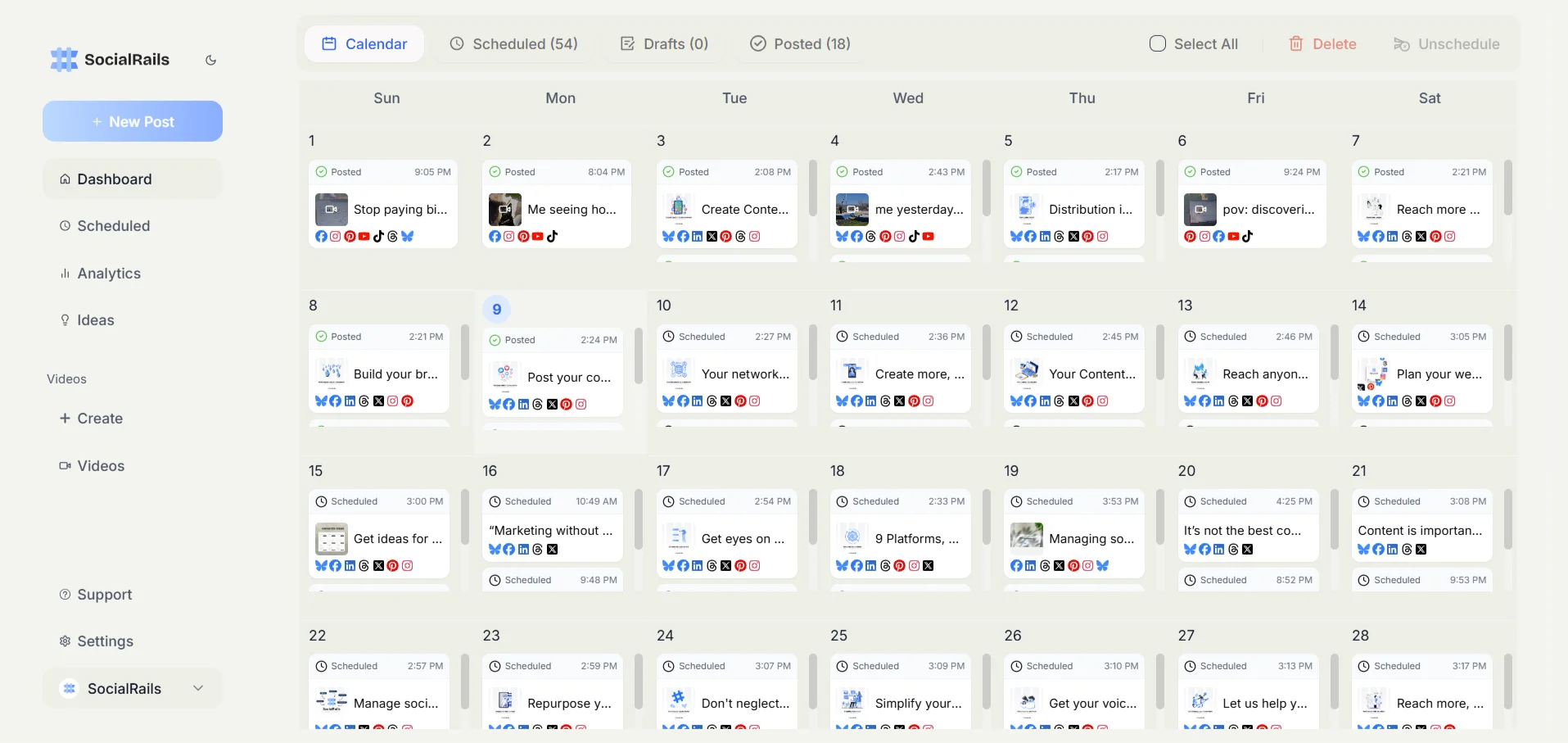
B2C Tools vs. B2B Social Media Software: Why It Matters
Before diving into individual tools, it helps to understand why generic social media management platforms often miss the mark for B2B teams.
This doesn't mean B2C tools can't be used for B2B—some (like Hootsuite and Sprout Social) have expanded into B2B use cases. But purpose-built B2B tools typically offer CRM integrations, lead tracking, employee advocacy, and LinkedIn-specific features that consumer-focused tools lack.
For related context on internal workflows, see our guides on corporate communication tools, employee advocacy programs, and SharePoint alternatives.
The 6 Categories of B2B Social Media Software
1. All-in-One Social Media Management
Post scheduling, analytics, team collaboration, and social inbox in a single platform.
Best for: B2B companies that need a central hub for managing social presence across multiple platforms.
Examples: Sprout Social, Hootsuite Business, Agorapulse
See our Sprout Social alternatives for more options.
2. LinkedIn-Specific Tools
LinkedIn optimization, Sales Navigator integration, personal branding analytics, and LinkedIn-first scheduling.
Best for: B2B companies where LinkedIn drives the majority of social results.
Examples: Shield Analytics, Taplio (pricing), LinkedIn Sales Navigator
See our guides on LinkedIn analytics tools, best LinkedIn schedulers, and Taplio alternatives.
3. Employee Advocacy Platforms
Amplify company content through employee networks, with gamification, pre-approved content libraries, and engagement tracking.
Best for: B2B organizations with 50+ employees wanting to scale organic reach through their people.
Examples: GaggleAMP, Oktopost, EveryoneSocial, Sociabble
4. Social Listening and Intelligence
Track brand mentions, competitor activity, industry conversations, sentiment, and emerging trends across social platforms and the web.
Best for: Enterprise B2B with dedicated social or PR teams monitoring reputation and competitive landscape.
Examples: Sprinklr, Brandwatch (see pricing), Mention
See our Sprinklr alternatives or Brandwatch alternatives for mid-market options. For compliance, see social media archiving software.
5. Social Selling Tools
Help sales teams identify prospects, engage with leads, and build relationships on social platforms—primarily LinkedIn.
Best for: B2B sales teams doing account-based outreach and relationship-building on LinkedIn.
Examples: LinkedIn Sales Navigator, Oktopost, ClearView Social
6. Content Creation and Visual Tools
AI content generation, video editing, graphic design, and branded asset creation for social media.
Best for: B2B teams without in-house content creators or design resources who need to maintain a consistent publishing cadence.
Examples: SocialRails, Canva for Enterprise, Descript
15 Best B2B Social Media Software Solutions
1. Sprout Social — Best All-in-One for Mid-Market B2B
What it does:
- Social media management (scheduling, inbox, analytics)
- Social listening and engagement
- Team collaboration and approval workflows
- Competitive analysis
- Custom reporting and CRM integrations (Salesforce, HubSpot)
Best for:
- Mid-market B2B companies ($10M-$500M revenue)
- Teams with dedicated social media managers
- Multi-platform presence (LinkedIn, Twitter/X, Facebook, Instagram)
Pricing:
- Standard: $249/month (5 profiles)
- Professional: $399/month (10 profiles)
- Advanced: $499/month (10 profiles, advanced analytics)
- Enterprise: Custom pricing
Pros:
- Robust analytics and reporting that can tie social to business outcomes
- Strong team collaboration with approval workflows
- Good social listening on Advanced plan
- CRM integrations for lead attribution
- Strong customer support
Cons:
- Expensive starting point ($249/month minimum)
- Per-profile pricing adds up quickly for multi-brand companies
- Limited AI content creation features
- May be overkill for startups or small teams
Best use case: A 50-person marketing team managing 10 social profiles with approval workflows, executive reporting, and Salesforce integration.
2. Oktopost — Best for B2B Employee Advocacy + Social Selling
What it does:
- Employee advocacy platform (amplify content through employee networks)
- Social media management and scheduling
- Lead tracking and attribution (connects social activity to CRM pipeline)
- Social listening
- Employee engagement gamification
Best for:
- Enterprise B2B (500+ employees)
- Companies wanting to scale LinkedIn organic reach
- B2B sales teams integrating social selling into their CRM workflow
Pricing:
- Custom pricing (typically $10,000-$30,000/year)
- Based on number of employees and features
Pros:
- Industry-leading B2B lead tracking (maps social interactions to pipeline)
- Strong Salesforce and Marketo integrations
- Employee advocacy with content performance analytics by contributor
- Built specifically for B2B (not a B2C tool with B2B features bolted on)
Cons:
- Enterprise-only pricing puts it out of reach for smaller teams
- Requires employee buy-in to get value from advocacy features
- Implementation can take 3-6 months for full rollout
- Smaller platform ecosystem compared to Sprout or Hootsuite
Best use case: A 1,000-person company activates 200 employees to share curated content on LinkedIn, then tracks which shares generate leads in Salesforce.
3. Hootsuite Business — Best for Multi-Platform B2B Management
What it does:
- Schedule posts across 35+ social platforms
- Social inbox (respond to messages/comments from one dashboard)
- Analytics and reporting
- Team collaboration with approval workflows
- Large app marketplace and integrations
Best for:
- B2B companies managing 5+ social platforms simultaneously
- Teams needing one dashboard for LinkedIn, Twitter/X, Facebook, Instagram, YouTube, and more
- Organizations already familiar with Hootsuite from B2C use
Pricing:
- Professional: $249/month (3 users, 20 accounts)
- Team: $449/month (5 users, unlimited accounts)
- Enterprise: Custom pricing
Pros:
- Supports the widest range of platforms (35+)
- Large app marketplace for custom integrations
- Familiar interface for marketers who've used it before
- Solid team workflows and permissions
Cons:
- Expensive relative to the feature set for B2B-specific needs
- Interface can feel dated compared to newer competitors
- AI features (OwlyWriter) cost extra on some plans
- Not purpose-built for B2B—LinkedIn features are less deep than specialized tools
Best use case: A 5-person B2B team managing LinkedIn, Twitter/X, Facebook, Instagram, and YouTube from a single dashboard.
Compare: Cheaper Hootsuite Alternatives
4. LinkedIn Sales Navigator + Campaign Manager — Best Native LinkedIn Tools for Social Selling
What it does:
- Advanced LinkedIn search and filtering (Sales Navigator)
- InMail messaging directly to prospects
- Lead recommendations based on your ideal customer profile
- LinkedIn advertising management (Campaign Manager)
- CRM sync with Salesforce, HubSpot, and Microsoft Dynamics
- Prepare for sales conversations with our discovery meeting template guide
Best for:
- B2B companies where LinkedIn is the primary social channel
- Sales teams doing social selling and account-based outreach
- ABM (account-based marketing) programs
Pricing:
- Sales Navigator Core: $99/month per user
- Sales Navigator Advanced: $149/month per user
- Campaign Manager: Self-serve (minimum $10/day ad spend)
Pros:
- Native LinkedIn data (most accurate prospecting data available)
- Essential for any LinkedIn-heavy B2B social selling strategy
- Direct integration with LinkedIn features (InMail, lead lists)
- Advanced filters for targeting specific industries, company sizes, roles
Cons:
- LinkedIn-only—you'll need other tools for other platforms
- Per-user pricing gets expensive for larger sales teams
- No content creation or scheduling features
- Sales Navigator and Campaign Manager are separate products
Best use case: A 10-person sales team uses Sales Navigator to identify decision-makers at target accounts and engage them through personalized outreach.
5. Agorapulse — Best Value All-in-One B2B Tool
What it does:
- Social media scheduling and publishing
- Unified social inbox
- Social listening (mentions, keywords)
- ROI analytics and reporting
- Team collaboration and approval workflows
Best for:
- Small to mid-sized B2B companies on a budget
- Teams wanting Sprout Social-level features at a lower price point
- Agencies managing multiple B2B clients
Pricing:
- Standard: $69/month (3 profiles, 2 users)
- Professional: $159/month (10 profiles, 6 users)
- Advanced: $239/month (20 profiles, 12 users)
Pros:
- Significantly more affordable than Sprout Social
- Excellent social inbox for managing engagement
- Good analytics with ROI tracking
- Collaborative features included in all plans
Cons:
- Social listening not as robust as dedicated tools like Brandwatch or Sprinklr
- Limited AI content generation features
- Per-profile pricing can still add up for multi-brand companies
Best use case: A 3-person B2B marketing team managing LinkedIn, Twitter/X, and Facebook with scheduling, analytics, and inbox for $69-159/month.
Compare: Cheaper Agorapulse Alternatives
6. Sprinklr — Best for Enterprise B2B at Scale
What it does:
- Enterprise social media management across all channels
- Advanced social listening and sentiment analysis
- Customer care and engagement workflows
- Content marketing platform
- Employee advocacy module
- AI-powered insights and automation
Best for:
- Enterprise B2B ($500M+ revenue) with global social teams
- Organizations needing a unified platform for social, care, and marketing
- Companies operating across 20+ countries with large teams
Pricing:
- Custom pricing (typically $30,000-$100,000+/year)
- Based on modules, users, and usage volume
Pros:
- Full-featured enterprise platform handling everything under one roof
- Advanced AI and automation capabilities
- Built for global team collaboration at scale
- Deep analytics, reporting, and compliance features
Cons:
- Extremely expensive—enterprise-only pricing
- Long implementation timeline (6-12 months is common)
- Overkill for small/mid-market companies
- Requires dedicated admin and ongoing training
Best use case: A Fortune 500 company with 50+ social media managers across 20 countries needs a unified platform for publishing, listening, engagement, and reporting.
7. SocialRails — Best for Content-First B2B Marketing
What it does:
- AI-powered content generation (LinkedIn posts, videos, graphics)
- Multi-platform scheduling (up to 27 social accounts)
- Video templates (350+) for thought leadership content
- Auto-recurring posts for consistent presence
- Team collaboration workspaces
Best for:
- B2B companies that publish frequently and need content creation help
- Teams without dedicated content creators or designers
- LinkedIn-heavy B2B marketing strategies
- Startups to mid-market companies
Pricing:
- Creator: $29/month (solo marketers)
- Business: $49/month (small teams, 5 members)
- Agency: $99/month (agencies, 15 members)
Pros:
- Unlimited AI content generation included
- 350+ video templates designed for B2B use cases
- Affordable compared to enterprise tools
- Fast onboarding
- Flat-rate pricing includes team members
Cons:
- No advanced social listening capabilities
- Limited CRM integrations compared to enterprise tools
- Stronger on content creation than deep analytics
Best use case: A B2B SaaS company publishing 20 LinkedIn posts/week and 10 videos/month without a full content team.
A B2B SaaS company with 50 employees needs social media software. They want scheduling, analytics, and lead tracking. Budget: $500/month. What should they choose?
8. GaggleAMP — Best Employee Advocacy with Gamification
What it does:
- Employee advocacy platform with pre-approved content library
- Gamification (leaderboards, points, recognition)
- Engagement tracking and ROI reporting
- Mobile app for easy employee sharing
- Manager controls for content curation
Best for:
- B2B companies with 50+ employees wanting to amplify organic social reach
- Organizations where employee networks far exceed company page reach
- Companies with an engaged culture ready to activate advocates
Pricing:
- Custom pricing (typically $5,000-$15,000/year)
- Based on number of employees
Pros:
- Simple for employees to use (one-click sharing)
- Gamification drives ongoing participation
- Scales organic reach significantly through personal networks
- Mobile-friendly for remote teams
Cons:
- Requires employee buy-in—results depend on participation rates
- Content still needs to be created separately (advocacy distributes, doesn't create)
- No posting or scheduling for company accounts
- ROI depends heavily on company culture
Best use case: A 200-person company gets 50 employees actively sharing curated content on LinkedIn, expanding each post's reach from hundreds to thousands.
9. Brandwatch — Best Social Listening for B2B Intelligence
What it does:
- Advanced social listening (track mentions, keywords, conversations across platforms and the web)
- Sentiment analysis and trend detection
- Competitive intelligence and benchmarking
- Influencer identification
- Crisis detection and alerting
For detailed comparisons, see Brandwatch vs Hootsuite and Brandwatch vs Sprout Social.
Best for:
- Enterprise B2B monitoring brand reputation and competitive landscape
- Companies in competitive markets needing real-time intelligence
- PR and communications teams tracking media mentions and sentiment
Pricing:
- Custom pricing (typically $10,000-$35,000/year)
Pros:
- One of the most powerful social listening platforms available
- AI-powered insights and trend detection
- Historical data going back years
- Image recognition (can detect brand logos in images)
Cons:
- Expensive—primarily for enterprise budgets
- Listening-only (no posting, scheduling, or content creation)
- Complex setup and steep learning curve
- More capability than most B2B companies need
Best use case: An enterprise B2B brand monitors competitor mentions daily, tracks industry conversation trends, and gets alerts for potential reputation issues.
10. Sendible — Best for Agencies Managing B2B Clients
What it does:
- Multi-client social media management from one platform
- White-label reporting branded for each client
- Client approval workflows
- Content suggestions and scheduling
- Integration hub connecting CRM, Canva, and analytics tools
For detailed comparisons, see Sendible vs Hootsuite and Sendible vs Sprout Social.
Best for:
- Agencies with 5+ B2B clients
- Freelancers managing multiple accounts
- Teams needing white-label reporting
Pricing:
- Creator: $29/month (6 profiles)
- Traction: $89/month (24 profiles)
- Scale: $199/month (49 profiles)
- Expansion: $399/month (105 profiles)
Pros:
- Purpose-built for agency workflows
- White-label reports for client presentations
- Client approval system keeps content on-brand
- Affordable for multi-client management
Cons:
- Not specifically built for B2B (it's platform-agnostic)
- Limited AI content features
- Analytics are basic compared to Sprout Social or Sprinklr
Best use case: An agency managing 10 B2B clients, each with LinkedIn and Twitter/X profiles, with branded reports for $89-199/month.
Compare: Cheaper Sendible Alternatives
11. Shield Analytics — Best LinkedIn-Only Analytics
What it does:
- Deep LinkedIn analytics for personal and company pages
- Competitive benchmarking against other LinkedIn profiles
- Post performance tracking with engagement breakdowns
- Follower demographics and growth trends
- Content performance patterns and recommendations
Best for:
- B2B companies going all-in on LinkedIn
- CEOs and founders building personal brands on LinkedIn
- Content creators and marketers tracking LinkedIn performance in detail
Pricing:
- Personal: $19/month (1 profile)
- Team: $49/month (5 profiles)
- Agency: $99/month (20 profiles)
Pros:
- The deepest LinkedIn analytics available (more detail than LinkedIn's native insights)
- Tracks personal profiles, not just company pages
- Competitive analysis to benchmark performance
- Affordable
Cons:
- LinkedIn-only—no other platform support
- Analytics only—no posting, scheduling, or content creation
- Must be combined with other tools for a complete stack
Best use case: A CEO building LinkedIn thought leadership wants to understand which content formats and topics drive the most profile views and connection requests.
12. Buffer — Affordable Scheduling (with B2B Limitations)
What it does:
- Simple social media scheduling across platforms
- Basic analytics and reporting
- Team collaboration features
- AI assistant for caption suggestions
Best for:
- Very small B2B teams or solopreneurs on tight budgets
- Companies that just need reliable scheduling and nothing more
- Early-stage startups before investing in B2B-specific tools
Pricing:
- Free: 3 channels
- Essentials: $6/month per channel
- Team: $12/month per channel
- Agency: $120/month (10 channels)
Pros:
- Simple, clean interface—easy to learn and use
- Very affordable entry point
- Reliable scheduling across platforms
- Good for getting started with social media management
Cons:
- Built primarily for B2C use cases (Instagram/Facebook focus)
- Limited LinkedIn-specific features
- No lead tracking, CRM integration, or attribution
- Basic analytics (engagement metrics, not business metrics like pipeline)
- No employee advocacy features
- Per-channel pricing can add up
What to consider: Buffer works well for scheduling, but B2B teams needing lead tracking, CRM integration, or employee advocacy will likely outgrow it quickly. It's a solid starting point, not a long-term B2B solution for most companies.
Compare: Cheaper Buffer Alternatives
13. Loomly — Best for Content Planning and Collaboration
What it does:
- Social media calendar with visual planning
- Post ideas and content inspiration
- Automated publishing across platforms
- Team collaboration with approval workflows
- Post optimization tips
Read our full Loomly review for details, or compare Loomly vs Sprout Social for enterprise alternatives.
Best for:
- B2B teams struggling with content ideation and planning
- Small marketing teams (2-5 people)
- Companies wanting structured content workflows and calendars
Pricing:
- Base: $32/month (10 accounts, 2 users)
- Standard: $80/month (20 accounts, 6 users)
- Advanced: $172/month (35 accounts, 14 users)
Pros:
- Intuitive content calendar UI
- Built-in post ideas feature helps with content ideation
- Affordable for small teams
- Easy to learn
Cons:
- Limited analytics compared to Sprout Social or Agorapulse
- No AI content generation
- Basic features compared to enterprise tools
Best use case: A 3-person B2B marketing team plans and approves content 2 weeks ahead using a collaborative calendar.
Compare: Cheaper Loomly Alternatives
14. CoSchedule — Best for Content + Social Integration
What it does:
- Unified marketing calendar (blog + social + email campaigns)
- Social media scheduling tied to content publishing
- Headline analyzer for content optimization
- Team workflows and task assignments
- Asset organizer for managing marketing materials
Best for:
- B2B content marketing teams that publish blogs and promote them on social
- Companies wanting a single calendar for all marketing activities
- Teams already using WordPress for content publishing
Pricing:
- Free Calendar: $0
- Social Calendar: $29/month (10 profiles)
- Content Calendar: $39/month (includes blog + social)
- Marketing Suite: Custom pricing
Pros:
- Integrates blog publishing directly with social promotion
- Content optimization tools (headline analyzer)
- Unified marketing calendar view
- Strong WordPress integration
Cons:
- Limited social analytics
- Basic social features compared to dedicated tools
- Better for content teams than pure social teams
Best use case: A B2B content team publishes 8 blog posts/month and automatically promotes each on LinkedIn and Twitter/X.
Compare: Cheaper CoSchedule Alternatives
15. Canva for Enterprise — Best for B2B Visual Content Creation
What it does:
- Graphic design templates for social media, presentations, and more
- Brand kit management (logos, colors, fonts locked in)
- Team collaboration on visual assets
- Video editing
- Presentation and document creation
Best for:
- B2B teams creating visual content without in-house designers
- Companies needing brand consistency across all social visuals
- Teams producing LinkedIn carousels, infographics, and video thumbnails
Pricing:
- Canva Pro: $15/month per user
- Canva for Teams: $30/month for first 5 users, then $10/user
- Enterprise: Custom pricing
Pros:
- No design skills needed—drag and drop templates
- Massive template library
- Brand kit ensures consistent visuals
- Affordable
Cons:
- Design and visual creation only—no social scheduling or analytics
- Must export and upload to social platforms (or use integrations)
- Not all templates are suited for B2B use cases
- Per-user pricing for larger teams
Best use case: A 5-person B2B team creates LinkedIn graphics, presentation decks, and one-pagers without hiring a designer.
How to Choose B2B Social Media Software: Decision Framework
Step 1: Define Your Primary Use Case
Step 2: Match to Your Team Size
Solo marketer or 1-2 person team:
- Agorapulse Standard ($69/month) or SocialRails Creator ($29/month)
- Add Shield Analytics ($19/month) for LinkedIn insights
Small team (3-10 people):
- Agorapulse Professional ($159/month) or SocialRails Business ($49/month)
- Consider Sales Navigator for sales team members ($99/user/month)
Mid-market team (10-50 people):
- Sprout Social Professional ($399/month) for management
- GaggleAMP ($5K-15K/year) for employee advocacy
- Sales Navigator team licenses for social selling
Enterprise team (50+ people):
- Sprinklr ($30K-100K+/year) for unified management
- Oktopost ($10K-30K/year) for employee advocacy + lead tracking
- Brandwatch ($10K-35K/year) for social listening
Your B2B company wants employees to share company content on their personal LinkedIn profiles. Which approach works best?
Step 3: Calculate Total Cost
When budgeting, account for:
- Base subscription (monthly or annual)
- Per-user or per-profile add-ons (these compound quickly)
- Implementation time (enterprise tools can take 3-12 months)
- Training costs (complex tools need onboarding)
- Integration costs (CRM connectors, API access may be separate)
Many B2B teams end up stacking 2-3 tools rather than using one platform for everything. A common stack might be: scheduling tool + LinkedIn analytics + CRM integration.
Stack Recommendations by Company Stage
B2B Startup (1-10 employees)
Why this works: Content creation is the biggest bottleneck for small teams. This stack handles creation, scheduling, and LinkedIn analytics without needing a full content team.
B2B Services Company (10-50 employees)
Why this works: Agorapulse handles scheduling and analytics, SocialRails handles content creation, and Sales Navigator equips the sales team for LinkedIn prospecting.
Mid-Market B2B (50-500 employees)
Why this works: Sprout for team workflows and executive reporting, GaggleAMP amplifies organic reach through employees, and Sales Navigator equips the sales team for social selling.
Enterprise B2B (500+ employees)
Why this works: Sprinklr handles global-scale management, Brandwatch provides competitive intelligence, and Oktopost drives employee advocacy with B2B-specific lead attribution.
Common Mistakes When Choosing B2B Social Media Software
Using Consumer Tools for B2B Goals
Choosing tools optimized for Instagram engagement when your real goal is LinkedIn lead generation leads to misaligned metrics and wasted budget. Look for tools with LinkedIn as a first-class platform and CRM integration for tracking leads.
Buying Enterprise Features You Won't Use
Many B2B teams buy the most expensive tool "in case we need it." Before committing:
- Do you actually use social listening daily? (Most teams don't)
- Do you need 50+ social profiles? (Most B2B companies manage 3-5)
- Do you need advanced approval workflows? (Small teams usually don't)
Start with what you need now. Upgrade when your team is actively using the tool daily and hitting limitations.
Ignoring Content Creation
Scheduling tools are only useful if you have content to schedule. For many B2B teams, the bottleneck isn't distribution—it's creating enough quality content consistently. Prioritize tools that help with creation (AI writing, video templates, design) alongside scheduling.
Tracking Vanity Metrics Instead of Business Outcomes
Likes, followers, and impressions feel good but don't close deals. Choose tools that can track:
- Social activity to website visits to demo requests (attribution)
- Employee shares to profile views to connection requests to opportunities
- Thought leadership content to brand search volume to inbound leads
Tools with CRM integration (Sprout Social, Oktopost, HubSpot Social) make this attribution possible.
How to Migrate Between Social Media Tools
Week 1: Audit Current Tool Usage
- Which features does your team actually use?
- How many team members log in weekly?
- What does it cost per active user?
- Where do your social-driven leads come from?
Week 2-3: Trial New Tools
- Run 2-3 new tools in parallel with your existing platform
- Have team members test each for ease of use, speed, and capability
- Compare setup time, learning curve, analytics clarity, and total cost
Week 4: Migrate
- Reconnect social accounts to the new tool
- Migrate or reschedule planned content
- Set up team members, permissions, and brand assets
- Integrate with CRM and analytics platforms
- Train the team on new workflows
- Keep old tool active for 1 month as a buffer before cancelling
Frequently Asked Questions
What is B2B social media software?
B2B social media software refers to tools designed to help business-to-business companies manage, create, schedule, analyze, and optimize their social media presence. Unlike consumer-focused tools, B2B social media software typically emphasizes LinkedIn, CRM integrations, lead tracking, employee advocacy, and metrics tied to pipeline and revenue rather than likes and followers.
Which social media platform is most important for B2B?
LinkedIn is the primary social media platform for most B2B companies. It's where business decision-makers spend time, and it supports the kind of thought leadership and professional content that drives B2B relationships. Twitter/X is often the secondary platform, followed by YouTube for longer-form content. The right mix depends on where your specific audience is active.
How much does B2B social media software cost?
Costs vary widely based on team size and features needed. Budget scheduling tools start around $29-69/month. Mid-market all-in-one platforms like Sprout Social or Agorapulse range from $69-499/month. Enterprise platforms like Sprinklr or dedicated employee advocacy tools like Oktopost run $10,000-$100,000+/year. Most B2B companies spend $100-500/month on social media software.
What's the difference between social media management and social listening tools?
Social media management tools help you publish, schedule, and respond to social content (Sprout Social, Hootsuite, Agorapulse). Social listening tools monitor what people say about your brand, competitors, and industry across social platforms and the web (Brandwatch, Sprinklr). Some platforms offer both, but dedicated listening tools go deeper on sentiment analysis, trend detection, and competitive intelligence.
Can small B2B teams benefit from employee advocacy software?
Employee advocacy works best with 50+ employees, since the value comes from amplifying reach through personal networks at scale. For teams under 50, informal advocacy (encouraging key leaders to share content manually) is often more practical than paying for dedicated software. Once your team is large enough that informal sharing breaks down, platforms like GaggleAMP or Oktopost make coordination manageable.
How do I track ROI from B2B social media software?
The most reliable way is CRM integration—connect your social media tool to Salesforce, HubSpot, or your CRM of choice so you can trace the path from social interaction to lead to opportunity to closed deal. Tools like Oktopost and Sprout Social offer this natively. Without CRM integration, you can use UTM parameters on social links and track conversions in Google Analytics, but attribution becomes less precise.
What is social selling software, and how does it differ from social media management?
Social selling tools help individual salespeople find, engage, and build relationships with prospects on social platforms—primarily LinkedIn. LinkedIn Sales Navigator is the dominant tool in this category. Social media management tools, by contrast, help marketing teams publish and manage content on company accounts. Many B2B companies use both: management tools for the brand, social selling tools for the sales team.
Do B2B companies need a white-label social media tool?
White-label features are primarily relevant for agencies managing social media on behalf of B2B clients. If you're managing your own social presence in-house, white-label reporting isn't necessary. Agencies should look at Sendible or Agorapulse for white-label capabilities.
Related Resources
B2B Social Media Strategy:
- B2B Social Media Strategy — Complete B2B playbook
- Social Media for Executives — Executive LinkedIn guide
- B2B Marketing Attribution — Track social media ROI
- Best SaaS Content Marketing Agencies — Vetted agencies for B2B content
Tool Comparisons:
- Best Social Media Management Tools for Enterprises (enterprise buyer picks, SSO, SOC 2, CSM)
- Best Social Media Tools for Marketing Teams (in-house team collaboration picks)
- 15 Social Media Tools Compared (full comparison guide)
- Sprout Social Pricing (full pricing breakdown)
- Hootsuite Pricing — Plans and costs explained
- Loomly Pricing — Team pricing details
- Buffer vs Loomly — Scheduling tool comparison
- Cheaper than Sprout Social — Affordable alternatives
- Cheaper than Hootsuite — Cost comparison
- Best Social Media Scheduler — Scheduling tools compared
- Sprout Social vs HubSpot — Marketing suite comparison
- Hootsuite vs HubSpot — Marketing platform comparison
- Sprout Social Review — Full review with pros and cons
Platform-Specific:
- LinkedIn Company Page Management — LinkedIn strategy
- Best B2B Social Media Platforms — Platform selection
Sales Enablement:
- Discovery Meeting Template Generator — Free tool for sales calls
- Discovery Meeting Template Guide — Guide to effective discovery questions
Create content, post everywhere
Create captions, images, and videos with AI. Schedule to 9 platforms in seconds.
Start your free trialBottom Line: Choose Based on What You'll Actually Use
The best B2B social media software is the tool your team will use consistently—not the one with the longest feature list.
Focus on:
- Content quality over posting frequency
- Lead attribution over vanity metrics
- Employee advocacy over company page followers alone
- Consistent execution over the "perfect" tool
A $69/month tool used daily delivers more value than a $499/month platform that sits idle because it's too complex for your team to adopt.
Quick recommendations by stage:
- Startups: SocialRails ($29/month) + Shield Analytics ($19/month) = $48/month
- Growth stage: SocialRails ($49/month) + Agorapulse ($159/month) = $208/month
- Mid-market: Sprout Social ($399/month) + Sales Navigator licenses
- Enterprise: Sprinklr + Oktopost + Brandwatch
Start with what you need now. Prove ROI. Then scale your toolset as your social program matures.
Was this article helpful?
Let us know what you think!